
- Home
- Products
- About Us
- Custom Services
- Solutions
- Resources
- News
- Contact
Views: 0 Author: Site Editor Publish Time: 2026-08-15 Origin: Site


Large-scale commercial holiday displays require highly durable materials. Municipal lighting projects also demand components built for extreme weather conditions. These installations must balance visual impact against severe structural stress. For 2D and 3D wireframe displays, backing and filling materials matter greatly. They are just as critical as the LEDs themselves. Sourcing managers and motif manufacturers often struggle during the initial material selection phase. You need backing options balancing cost, environmental compliance, and outdoor durability. Finding this balance prevents catastrophic display failures mid-season.
Choosing the right polymer for tinsel carpet mesh requires careful analysis. You must take an objective look at core chemical properties. Environmental resilience plays a massive role in outdoor applications. Regional compliance standards dictate what you can legally import and install. This guide will walk you through evaluating PET and PVC materials. We explore their structural functions and strict engineering requirements. You will learn how to verify compliance and avoid premature material degradation. Optimizing your procurement strategy ensures seamless production cycles and stunning holiday displays.
Material Baseline: PVC offers superior pliability and cost-efficiency, while PET provides higher eco-compliance (recyclability) and better thermal stability.
Application Focus: The structural integrity of the mesh net backing dictates the wind resistance and lifespan of large outdoor Christmas motifs.
Compliance is Non-Negotiable: Commercial installations require verifiable flame retardancy (e.g., V-0, B1) and toxicity compliance (RoHS/REACH) depending on the destination market.
Sourcing Red Flags: Inconsistent color fastness and poor cold-crack resistance are the leading causes of premature motif failure in winter climates.
Commercial motif manufacturing relies heavily on dependable structural fillers. Tinsel carpet acts as the primary reflective filler. It provides a dense color base for large holiday designs. Factory workers attach this mesh directly to aluminum or iron frames. This manual process maximizes LED light dispersion across the entire display surface. The glossy foliage catches the light from surrounding bulbs. It creates a voluminous, glowing effect during nighttime operations.
Using a highly effective Christmas motif decoration material directly impacts your bottom line. High-quality backing reduces the total number of LEDs required per square meter. Reflective foil properties amplify the ambient light output significantly. This optical illusion optimizes your overall manufacturing costs. You achieve a brighter display using fewer electronic components. Consequently, you reduce potential points of electrical failure.
Operational realities on the factory floor demand extreme material durability. The mesh must withstand tight wrapping around complex metal shapes. Assembly teams use zip-ties to anchor the backing tightly. They fold the material sharply around corners and acute angles. The motif assembly process applies significant tension to the backing. Sub-standard mesh nets will shed needles or tear under pressure. Manufacturers must prioritize robust materials to maintain production speed. Stronger polymers prevent costly rework and ensure consistent product quality.
Choosing between polymer types requires understanding their core chemical attributes. PVC (Polyvinyl Chloride) offers distinct advantages and specific drawbacks. It is highly malleable and very cost-effective for large production runs. PVC is inherently flame-retardant when suppliers formulate it correctly. It also provides excellent water resistance for prolonged outdoor displays. However, PVC possesses notable weaknesses. It is prone to cold-cracking in sub-zero winter temperatures. This brittleness occurs if manufacturers omit high-quality chemical plasticizers. Furthermore, PVC faces strict environmental scrutiny in certain European markets.
PET (Polyethylene Terephthalate) presents a entirely different material profile. It is environmentally friendly and remains 100% recyclable. PET boasts exceptionally high tensile strength under physical load. It maintains structural stability across much wider temperature extremes. You will also notice superior color retention against intense UV exposure. On the downside, PET feels generally more rigid than PVC. Intricate wireframe wrapping becomes slightly more labor-intensive for workers. PET typically carries a higher per-meter cost upfront.
Many experienced manufacturers adopt a strategic hybrid approach. When a PET PVC tinsel carpet composite is utilized, assess the ratio carefully. Suppliers often rely on a PVC mesh core for maximum flexibility. They pair this core alongside PET tinsel needles. This intelligent combination ensures long-lasting color fastness. It also guarantees ease of assembly and higher eco-compliance.
Table: Polymer Characteristics Comparison Chart
Property | PVC (Polyvinyl Chloride) | PET (Polyethylene Terephthalate) |
|---|---|---|
Flexibility | Highly malleable, easy to wrap | Rigid, requires more effort |
Cold Weather Resistance | Prone to cracking without plasticizers | Excellent thermal stability |
Environmental Impact | Faces strict regulatory scrutiny | 100% recyclable, eco-friendly |
UV Color Retention | Moderate fading over time | Superior resistance to fading |
Cost Efficiency | Very budget-friendly | Higher initial investment |
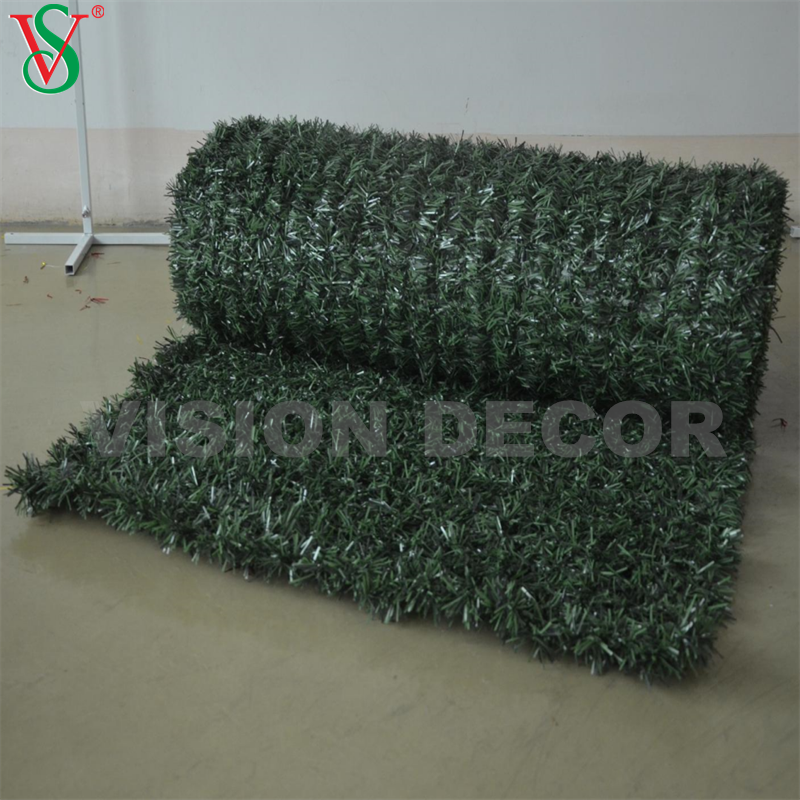
Designing large-scale motifs requires strict attention to structural engineering principles. Tensile strength and load-bearing capacity are absolutely paramount. The underlying mesh net must support the weight of the tinsel. It must also hold the attached LEDs securely in place. More importantly, it must resist severe wind shear during outdoor installations. Coastal cities and high-altitude locations present massive aerodynamic challenges. A weak structural core will fail under sustained wind loads.
Evaluating grid density is a critical step for project engineers. Common mesh grid sizes include 1x1cm and 2x2cm configurations. Tighter grids offer vastly better light reflection during the night. However, tighter grids increase wind resistance by altering the drag coefficient. High wind drag poses severe risks for pole-mounted motifs. Excessive wind forces can bend metal mounting brackets. Engineers must balance visual density against aerodynamic safety protocols.
Frame attachment practices determine the long-term stability of the motif. Using high-quality PVC mesh net carpetdecoration material is only half the battle. You must secure mesh nets to metal frames properly. Poor installation techniques compromise the best raw materials. We recommend implementing specific anchoring techniques to ensure safety. This prevents sagging under heavy ice and snow loads.
Follow these best practices for securing mesh to metal frames:
Space heavy-duty zip-ties evenly every 10 to 15 centimeters.
Pull the mesh completely taut before securing the primary corners.
Double-wrap anchor points situated directly on load-bearing structural joints.
Trim excess material carefully to avoid snagging stray wind currents.
Use UV-resistant nylon fasteners to prevent premature plastic degradation.
Safety and compliance serve as your primary vendor sourcing filters. Fire safety standards are incredibly strict for commercial public displays. Municipal outdoor installations require rigid adherence to local flammability protocols. Do not accept generic "fireproof" claims from unverified suppliers. You must demand independent third-party lab testing documents. You should look specifically for UL 94, EN 71-2, or local fire marshal standards. Indoor shopping mall displays face even tighter fire code inspections.
Chemical compliance is equally critical for international commerce. Imports destined for North America and Europe face tight border regulations. You must verify RoHS and REACH certifications actively. These global standards ensure the absence of restricted heavy metals. Toxic elements like lead and cadmium often hide in low-grade color dyes. Proper certification documentation shields your business from costly customs seizures. It also protects public health and your brand reputation.
Cold-crack and UV degradation testing validate the expected outdoor lifespan. You should request accelerated weathering test data from potential suppliers. Quality factories use Xenon arc testing chambers to simulate years of exposure. Sub-standard materials will fail quickly under real-world conditions. They often fade from deep green or red to a translucent shade. This catastrophic visual degradation can happen within a single 6-week holiday deployment.
Avoid these common mistakes during the quality control phase:
Ignoring localized fire safety codes for indoor shopping mall environments.
Failing to request independent third-party laboratory test reports.
Overlooking the long-term effects of intense UV exposure on cheap color dyes.
Skipping sub-zero pliability tests for installations destined for northern climates.
Sourcing the right material requires a highly calculated procurement strategy. Customization capabilities separate premium suppliers from basic commodity trading companies. Assess the supplier's ability to custom-match exact Pantone colors. They should be able to adjust tinsel thickness measured in microns. Modifying mesh widths helps manufacturers reduce expensive production waste. Tailoring the roll width to your specific frame dimensions saves considerable money.
Lead times directly impact your seasonal production cycles. Motif manufacturing usually peaks between July and September globally. Material sourcing timelines must account for complex international logistics. Plan for a 30 to 45-day sea-freight transit window. Always add this ocean transit time to the factory production lead times. Port congestion and customs clearance delays can derail your assembly schedule. Early procurement prevents expensive air-freight rescues later in the season.
Sample verification remains a completely non-negotiable step. Always request physical samples before authorizing any bulk order. Test the material's pliability by placing it in a commercial freezer. Verify its color fastness against high-intensity LED light exposure. When evaluating a hybrid PET PVC tinsel carpet, pull the fibers firmly. This prevents tinsel needles from separating easily from the backing mesh. Mechanical binding strength matters just as much as chemical composition.
The choice between PET and PVC is not merely a material preference. It is a strategic business decision dictated by your installation environment. Local compliance laws and the required motif lifespan heavily influence this choice. Selecting the right polymer safeguards your investment against weather damage. It also ensures your displays meet strict municipal safety standards.
Follow these next steps to ensure your upcoming project succeeds:
Define your target market's specific environmental and safety regulations first.
Calculate your exact wind-load and ambient temperature parameters for the deployment zone.
Mandate comprehensive compliance documentation before initiating any physical sample requests.
Partner closely with suppliers who offer tailored OEM and ODM production capabilities.
Implement a strict quality control checklist for all incoming container shipments.
A: It usually lasts 2 to 3 holiday seasons. This equates to 6 to 9 months of total outdoor exposure. The exact lifespan depends heavily on UV intensity and cold-weather extremes. Eventually, noticeable fading or material brittleness will occur.
A: While PET is highly recyclable and avoids phthalate plasticizers, "green" acceptance is not universal. It depends strictly on local municipal codes. Specific project sustainability mandates also dictate whether PET qualifies as a compliant eco-friendly alternative for your display.
A: You should specify a thicker PVC mesh core from your supplier. Utilize a wider grid pattern to allow wind pass-through safely. Additionally, increase the density of zip-tie anchor points directly along the structural metal frame.
A: Yes. B2B suppliers can manufacture materials with customized opacity. They can provide matte or gloss finishes. You can also request metallic laminations. These customizations ensure the motif remains visually striking even when it is unlit during the day.


