
- Home
- Products
- About Us
- Custom Services
- Solutions
- Resources
- News
- Contact
Views: 0 Author: Site Editor Publish Time: 2026-10-26 Origin: Site


A standard backyard often loses its visual appeal as the sun goes down. It fades into a dull and uninspired shadow. Historically, homeowners simply accepted this nocturnal fade or relied on harsh, glaring floodlights to pierce the darkness. Modern landscape design has fundamentally shifted toward a concept known as colorscaping. This technique uses strategic, diffused illumination to create a vibrant, resort-like ambiance.
The cornerstone of this modern aesthetic is the Outdoor LED Ball Light. It serves as a highly versatile fixture for transforming patios, gardens, and poolside areas. These lighting systems consist of durable polyethylene spheres equipped with highly customizable diode cores. They beautifully combine structural resilience with advanced lighting technology. Consequently, they are rapidly becoming the top choice for both residential and commercial landscape architecture.
The global outdoor lighting market is currently experiencing a massive paradigm shift. Recent industry analyses show consumers are no longer satisfied with static, single-color security floods. Instead, the demand for smart, sustainable, and emotionally resonant experiential lighting is skyrocketing. Landscape architects note that modern property owners expect their gardens to function as dynamic extensions of their indoor living spaces. There is a heavy preference for customizable smart technologies that integrate seamlessly with broader control ecosystems. This trend underscores a movement where outdoor lighting is treated as interactive art rather than mere utility.
This comprehensive guide covers everything you need to know about these luminous spheres. You will learn how to choose the exact right technology, master practical installation methods, and evaluate key buying considerations. This ensures you make an informed, lasting investment for your exterior space.
Durability Meets Design: Manufactured from high-density polyethylene, these glowing orbs are engineered to be shatterproof, waterproof, and highly UV-resistant. They function as elegant architectural sculptures during the day and dynamic light sources after dark.
Customizable Ambiance: Advanced diode technology enables users to seamlessly transition between millions of saturated colors and precise warm or cool white tones. This perfectly matches specific environmental moods or event requirements.
Smart Control Options: Contemporary lighting systems offer scalable control methodologies. These range from standard radio frequency remotes to professional-grade DMX512 and SPI protocols for synchronized, multi-fixture colorscaping.
Versatile Placement: Due to varying Ingress Protection ratings and mounting options, these spherical fixtures can be deployed as floating pool illuminators, ground-inserted pathway markers, or freestanding focal points.
Historically, outdoor landscape lighting prioritized strict functionality over aesthetics. Property managers relied heavily on industrial-looking halogen fixtures or basic incandescent path markers to provide basic visibility and security. In contrast, modern landscape architecture treats lighting as a critical, emotional design element. This evolution has driven the market away from exposed, utilitarian hardware. The focus is now on geometric, diffused lighting fixtures that do not create blinding glare.
At the forefront of this shift is the polyethylene ball lamp. Polyethylene is a highly durable, eco-friendly thermoplastic polymer. Manufacturers typically produce these spheres using a rotational molding process. This specific engineering technique ensures a uniform, seamless wall thickness. The resulting matte white surface acts as an exceptional optical diffuser. Cheap plastics or clear glass often expose the harsh, concentrated hot spots of individual LED diodes. Rotational-molded polyethylene disperses the internal light evenly across the entire surface of the sphere. This creates a soft, uniform, and luxurious glow.
When evaluating spherical outdoor lighting, understanding the technical differences in internal LED chip configurations is critical. Making the correct choice depends entirely on your specific application and long-term landscaping goals.
Standard RGB systems utilize LED nodes that contain three primary color diodes: Red, Green, and Blue. By varying the intensity of these three distinct diodes, the system mixes them to produce a wide spectrum of colors. Standard RGB is highly effective for purely decorative areas, creating energetic party atmospheres, and executing dynamic color-changing effects. However, when an RGB system attempts to create white light by turning all three diodes on simultaneously, the result is usually a cool white that carries a noticeable, muddy bluish tint.
RGBW technology solves this white-light limitation. It incorporates a fourth, dedicated white LED diode into the chip structure. Depending on the manufacturer, this dedicated diode is typically calibrated to either Warm White around 3000K or Cool White around 6000K. The inclusion of this dedicated white phosphor diode is highly significant. It allows the fixture to project a pure, crisp white light that rivals traditional, high-end landscape lighting. An RGBW ball light functions as elegant, everyday illumination for pathways, while still retaining the ability to switch to vibrant colors for special events.
Feature | Standard RGB System | RGBW System |
|---|---|---|
Primary Use | Events, parties, dynamic effects | Daily illumination, architectural highlighting |
White Light Quality | Cool, bluish or purplish tint | Pure, crisp warm or cool white |
Cost Profile | Budget-friendly | Premium investment |
Best Application | Commercial holiday displays | Permanent residential installations |
Selecting the appropriate hardware requires careful evaluation of specific technical parameters. Reviewing the following specifications ensures that the product will survive outdoor conditions and meet your spatial requirements.
Ingress Protection ratings dictate a fixture's resistance to dust and moisture. This is the most critical metric for any outdoor electronic device. For standard outdoor landscape applications, a minimum rating of IP65 is mandatory. An IP65 rating means the sphere is completely dust-tight and protected against low-pressure water jets, such as heavy rain or standard sprinkler systems. If you intend to use the ball lights as floating features in a swimming pool or fountain, you must select an IP68 rating. This certifies the product for continuous underwater submersion.
The method of power delivery impacts both installation complexity and the visual cleanliness of your space. Battery-operated units typically utilize robust 18650 lithium-ion cells. They offer maximum portability and a clean, cord-free aesthetic. High-quality models generally provide 8 to 12 hours of continuous runtime. Hardwired plug-in options operate on low-voltage systems, usually DC12V or 24V. Hardwired spheres are designed for permanent landscape installations. They offer uninterrupted, reliable operation and are best suited for ground-inserted path lighting.
Selecting the appropriate diameter is crucial for maintaining visual proportion. Small spheres around 10 inches are ideal for tight garden borders. Medium spheres around 16 inches serve as excellent ambient floor lamps for patio corners. Large statement pieces above 24 inches are perfect for expansive open lawns or commercial hotel lobbies.
The perceived complexity of installing color-changing systems often deters property owners. Fortunately, modern control protocols range from simple plug-and-play remotes to sophisticated digital mapping. This easily accommodates both novice users and professional integrators.
For standard residential use, most standalone polyethylene spheres utilize Radio Frequency remotes. Radio Frequency signals can transmit through walls and foliage, typically up to 50 feet. Consumer models increasingly incorporate Bluetooth or Wi-Fi modules, allowing users to control the lighting via proprietary smartphone applications.
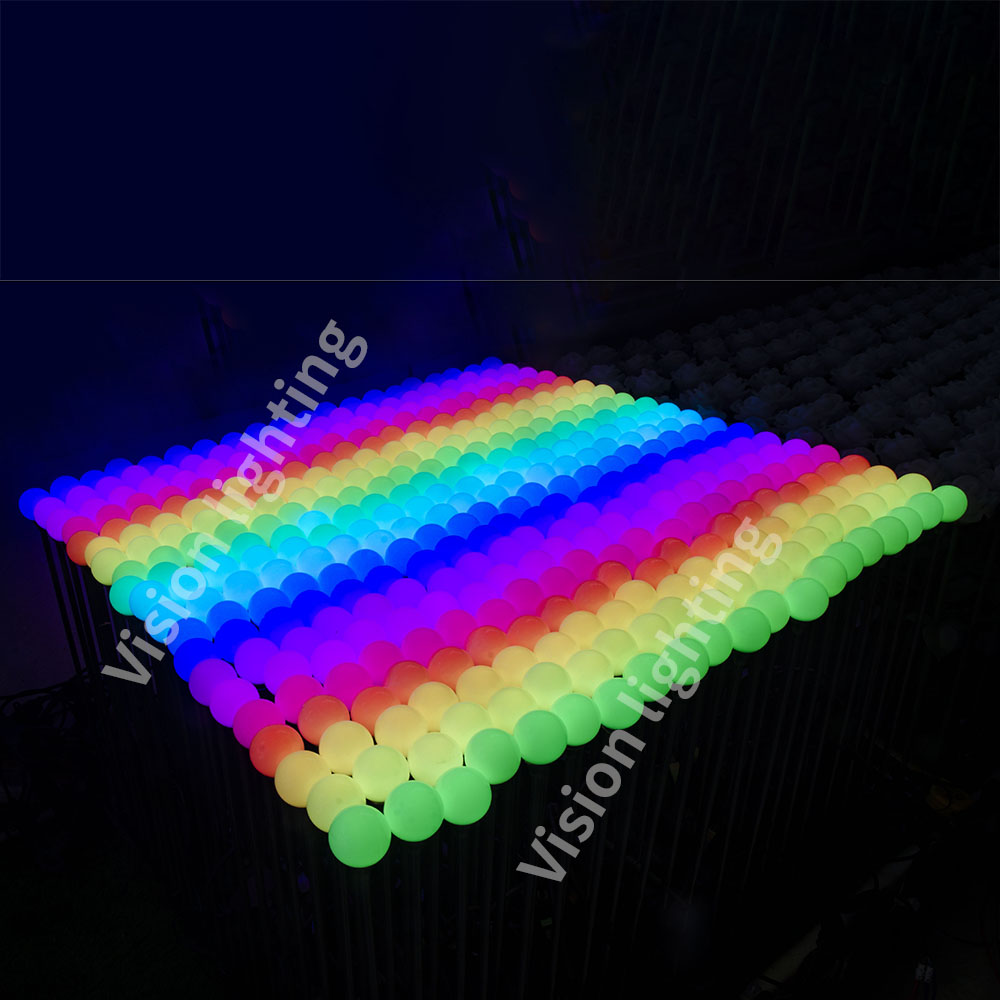
For high-end residential estates or commercial installations, basic remotes are insufficient. This is where Digital Multiplex and Serial Peripheral Interface protocols become necessary. By integrating DMX SPI RGB landscape decoration LED PE ball lights into a broader control network, lighting designers can assign specific digital addresses to each individual sphere. This professional-grade setup allows multiple fixtures to communicate seamlessly. You can execute complex chasing effects, meteor trails, and synchronized color sweeps that move fluidly across an entire lawn.
Proper ground insertion is required for permanent setups to prevent lightweight spheres from being displaced by heavy winds. First, ensure the soil is relatively soft and level. Next, thread the included ABS plastic or aluminum ground spike into the reinforced threaded base of the lamp. Dig a shallow trench to conceal the low-voltage cables if you are using a hardwired system. Finally, press the spike firmly into the turf by applying even downward pressure on the base. Never strike the top of the sphere with a hammer, as the shock will permanently damage the internal LED diodes.
Strategic placement maximizes the visual impact of your investment. Positioning medium-sized spheres in the corners of a wooden deck provides soft, indirect lighting. This establishes a deeply relaxing evening mood without blinding guests with harsh glare. The polyethylene material remains cool to the touch. They are perfectly safe to place directly on composite decking or near busy foot traffic.
Replacing traditional, directional path lights with ground-inserted LED ball lights instantly modernizes the approach to a property. Lining a winding garden path with spheres spaced 6 to 8 feet apart creates a clear boundary. Set to a warm white, they provide functional safety illumination. Switched to vibrant colors, they transform into an immersive walkway.
Water features provide an optimal, dynamic canvas. Deploying IP68-rated waterproof models directly into a pool allows the light to reflect off the undulating surface of the water. This doubles the visual footprint and creates a kinetic aesthetic that static lighting simply cannot replicate. Hospitality businesses utilize these fixtures heavily for experiential marketing. Event planners frequently use DMX-controlled spheres to brand spaces with specific corporate colors.
The true return on investment for ball lamps is largely driven by their dual-state aesthetic impact. Traditional floodlights are visually intrusive and offer zero decorative value during daylight hours. Polyethylene spheres contribute beautifully to the landscape design around the clock.
During the day, the unlit spheres present as deliberate, modern art sculptures. Their smooth, geometric form provides a stark contrast to the organic shapes of garden foliage. Premium polyethylene is treated with UV inhibitors during manufacturing. This ensures the crisp white plastic does not yellow, become brittle, or degrade when subjected to harsh, direct sunlight over multiple seasons.
As ambient light fades, the transformation occurs. The psychological impact of environmental color is profound. With a simple digital command, property owners can alter the entire atmosphere of their yard. Cool blues and cyans promote relaxation around a spa area. Warm oranges simulate the cozy, inviting glow of a fire pit. Vibrant magentas instantly shift the environment into a high-energy entertainment space.
One of the primary advantages of polyethylene lighting systems is their incredibly low maintenance requirement. Basic care ensures longevity and sustained optical clarity. Over time, outdoor spheres will naturally accumulate dust and hard water spots. To clean the surface, use a soft microfiber cloth combined with a mild solution of dish soap and warm water. It is crucial to avoid using abrasive scrubbing pads or harsh chemical solvents like acetone. These will degrade the UV-resistant coating and scratch the matte finish, which negatively impacts light diffusion.
Extreme freezing conditions require careful consideration. If the ball lamps are hardwired and rated for severe weather, they can generally remain outdoors year-round. Prolonged exposure to sub-zero temperatures will permanently degrade the lithium-ion battery cells in portable units. It is highly recommended to bring battery-powered spheres indoors during harsh winters. Charge the batteries to approximately 50 percent capacity before storing them. This is the optimal state of charge for long-term lithium-ion preservation.
An Outdoor LED Ball Light is far more than just a simple illumination fixture. It is a durable, highly versatile design element that beautifully bridges the gap between modern landscape art and functional engineering. By moving away from harsh floodlights and embracing the soft, diffused glow of geometric spheres, you can completely redefine your exterior spaces.
To ensure you get the most out of your investment, carefully evaluate your technical needs. Choose an RGBW system if you require crisp, everyday white light alongside vibrant colors. Select the appropriate Ingress Protection rating based on water exposure. Determine the best control method to achieve flawless colorscaping.
Are you ready to elevate your patio, pool, or garden space? Explore premium, engineering-grade options at VS Vision Lighting to find the exact specifications your project requires and begin your stunning outdoor transformation today.
Yes, as long as the specific light has an IP65 rating or higher. An IP65 rating signifies that the fixture is completely sealed against dust and can comfortably withstand heavy rain and direct jets of water from sprinklers. If you plan to submerge the light fully in a pool or pond, ensure you purchase a model with a specialized IP68 rating.
Most high-quality rechargeable polyethylene ball lights utilize robust lithium-ion batteries that will reliably last between 8 to 12 hours on a single charge. The exact duration depends heavily on the brightness level and the specific color mode selected. Dynamic color-changing modes consume slightly more power than static, dimmed colors.
A standard remote relies on radio frequencies and is ideal for individual or small groups of lights, allowing for basic color and brightness changes. A DMX system is a professional-grade digital setup that networks multiple lights together. It allows users to program synchronized light shows, complex pixel-mapping effects, and precise color-matching across an entire landscape.
Premium models are manufactured from high-density, UV-resistant polyethylene. This specific engineering and chemical treatment process prevents the material from yellowing, fading, or becoming brittle, even when exposed to direct, intense sunlight over extended summer periods.
Absolutely. LED technology is highly energy-efficient and emits virtually no heat. This ensures the exterior surface of the ball remains cool and safe to the touch at all times. The thick polyethylene shell is completely shatterproof, making it a significantly safer and more durable alternative to traditional glass landscape fixtures.
Syncing multiple units requires a unified control protocol. For basic setups, a single 2.4G radio frequency remote can pair with multiple lamps within a 50-foot radius. For precise synchronization and complex pixel-mapping, you must use DMX512 or SPI decoders connected to a central smart controller.
Yes. Advanced LED diodes consume a fraction of the electricity required by traditional halogen or incandescent landscape bulbs. A standard 16-inch sphere typically draws less than 5 watts of power even when displaying bright, saturated colors.


