
- Home
- Products
- About Us
- Custom Services
- Solutions
- Resources
- News
- Contact
Views: 0 Author: Site Editor Publish Time: 2026-08-10 Origin: Site


Commercial buyers, event directors, and facility managers are shifting focus today. They are moving away from off-the-shelf seasonal lighting. Instead, they demand bespoke structural illuminations. Standard displays often fail to align properly. They struggle to capture specific brand identities accurately. They also suffer from premature wear in harsh environments. Furthermore, they lack the massive scale needed for commercial focal points. This transition to custom installations represents a highly structured procurement process. It requires balancing aesthetic intent against hard engineering realities. You must carefully consider wind load, electrical compliance, and storage scalability. In this guide, you will learn how to vet custom manufacturers efficiently. You will discover practical engineering baselines for long-term durability. We will also explore the logistical planning needed for seamless seasonal deployment. These insights guarantee a safer, more striking structural display.
Material Selection is Critical: Structural integrity relies on rust-proof aluminum frames and UV-resistant PVC/LED components.
Compliance Exceeds Aesthetics: True evaluation of a 3D motif light requires validating IP ratings (IP65+), UL/CE certifications, and fire-retardant material baselines.
Design Must Account for Logistics: Scalability depends on modular construction, allowing large pieces to be disassembled for seasonal storage and maintenance.
Every successful deployment requires strict scoping parameters before fabrication begins. You must establish what a successful installation actually looks like. Teams often measure success through foot traffic generation. They also track social media visibility and multi-season reusability. A well-designed 3D Motif Light serves as a major destination anchor. It draws crowds and encourages prolonged visitor engagement.
Dimensional and weight limitations dictate the entire design framework. You need to map the intended installation site meticulously. Consider whether you will place the structure on a roof, a park lawn, or an indoor atrium. Each location imposes distinct structural weight limits. Roof installations require specialized load distribution grids. Park lawns demand deep soil anchors to prevent shifting. Atriums rely on non-marring floor pads to protect expensive tiling.
Power infrastructure assessment remains a critical, non-negotiable step. Large-scale custom displays draw significant electrical wattage. You must calculate available site amperage against the total wattage draw. This calculation prevents sudden circuit overloads during peak operating hours.
Audit existing power panels near the installation zone immediately.
Calculate the continuous load of all planned lighting fixtures accurately.
Reserve a twenty percent power buffer for safety margins.
Identify dedicated circuits to avoid tripping shared breakers.
Failing to map power early forces expensive last-minute generator rentals. It also introduces unsightly extension cords into pedestrian walkways.
The foundation of any structural display depends heavily on frame construction. Manufacturers typically offer powder-coated aluminum or galvanized steel options. Aluminum provides a lightweight, highly rust-resistant framework. Steel is notably heavier and heavily prone to rust if scratched. We strongly recommend aluminum for long-term commercial use. It drastically simplifies manual assembly and handles outdoor moisture perfectly. Aluminum structures outlast steel alternatives in almost every outdoor scenario.
LED component specifications dictate visual longevity over multiple seasons. You must define acceptable standards for the rope or string lights. Always look for components demonstrating extremely low lumen depreciation over time. Thick, UV-protected PVC tubing prevents sun-induced cracking. Wiring should utilize pure copper cores exclusively. You must actively avoid copper-clad aluminum wire. It corrodes quickly and carries electrical currents poorly, causing uneven illumination.
You must also evaluate smart integration against traditional static setups. Addressable RGB pixels and DMX controllers enable programmable light shows. They create highly dynamic visitor experiences. However, static or twinkle LEDs offer classic elegance and require minimal technical oversight. You should assess the return on investment carefully. Programmable setups demand skilled technicians for ongoing software management.
Material Type | Weight Profile | Rust Resistance | Recommended Use Case |
|---|---|---|---|
Powder-Coated Aluminum | Lightweight | Excellent | Multi-season outdoor commercial displays |
Galvanized Steel | Heavy | Moderate (Vulnerable if scratched) | Permanent indoor installations |
Fiberglass Reinforced | Medium | Immune to rust | Marine or highly corrosive environments |
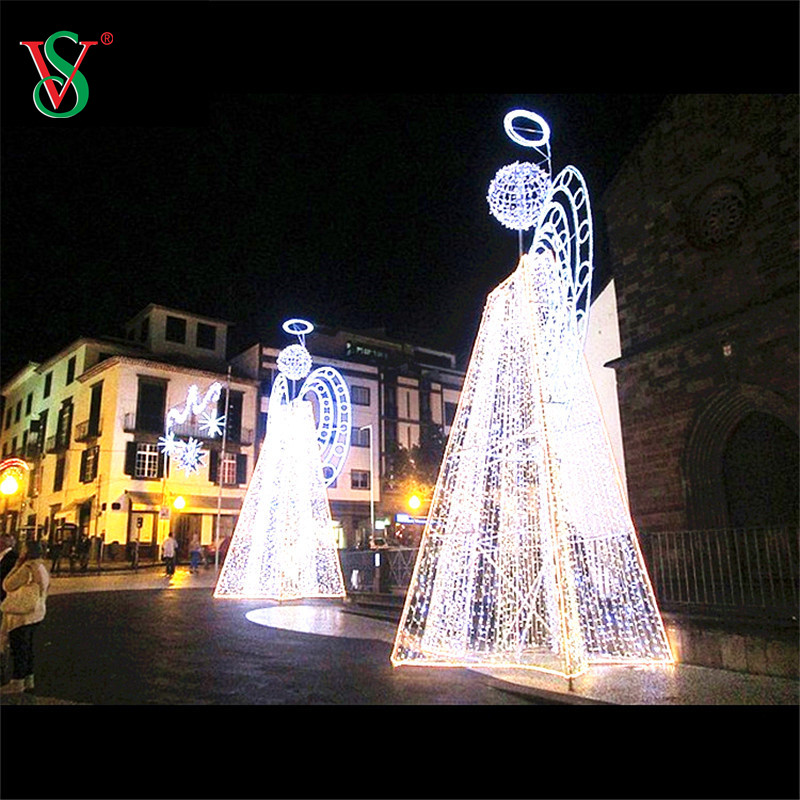
Commercial lighting encompasses diverse applications ranging from winter festivals to year-round botanical exhibits. Tailoring the design category to the environment guarantees maximum visual impact.
Municipal squares and mall atriums often require massive vertical anchors. Deploying a 3D Christmas tree light structure serves as a highly scalable alternative. It easily replaces live trees in high-traffic public spaces. Designers must focus on modular tier-by-tier assembly. This modularity allows crews to stack sections safely using standard boom lifts. You can adjust the height annually by adding or removing intermediate tiers.
Traditional winter festival routes benefit from classical, recognizable designs. Evaluating a 3D angel motif light involves balancing daytime aesthetics and nighttime illumination. Unlit frames can appear skeletal or industrial during daylight hours. High-quality fabricators fill empty spaces using reflective tinsel or colored polycarbonate mesh. This ensures the structure remains visually appealing under natural sunlight before the lights power on.
Interactive light trails demand unique, site-specific artistry. Sourcing a 3D animal light sculpture transforms botanical gardens and zoos. It creates highly engaging evening attractions for families. Translating organic shapes into rigid frames presents unique design challenges. You must mandate high-density LED wrapping. Sparse lighting fails to convey smooth muscular curves or fine fur textures. High-density wrapping outlines anatomical details accurately, bringing the sculpture to life.
Weatherproofing protects your investment from catastrophic environmental failure. Understanding Ingress Protection (IP) ratings prevents premature electrical shorts. IP65 serves as the absolute baseline for outdoor 3D motif lights. It ensures protection against low-pressure water jets and total dust ingress. However, specific environments demand strict IP67 ratings. Mandate IP67 for ground-level installations in heavy snow zones. Flood-prone areas also require these submersible-rated electrical components.
Wind load and aerodynamics pose severe physical safety risks. Solid diffusers act like massive sails in high-wind zones. They capture wind and place immense stress on the anchoring system. Open wireframe designs allow wind to pass through harmlessly. You must detail these implementation risks clearly during the planning phase. Furthermore, establish strict guy-wire anchoring rules. Any structure exceeding six feet tall requires dedicated anchoring points. Installers must secure these points to concrete ballasts or deep earth anchors.
Electrical compliance heavily impacts public safety and liability. Improper field-splicing introduces severe electrocution risks. Installers sometimes use inadequate electrical tape in wet environments. Ensure manufacturers provide waterproof, threaded connector pigtails directly from the factory. You must demand UL, CE, or RoHS certified power supplies exclusively.
Common Mistakes:
Ignoring the daytime visual appeal of unlit structural frames.
Assuming a lightweight aluminum frame requires zero ground anchoring.
Using indoor-rated extension cords for outdoor connections.
Failing to cap exposed unused connector pigtails securely.
Procuring massive displays requires extensive logistical foresight. You cannot ignore shipping constraints and seasonal storage limitations.
Shipping large motifs fully assembled wastes expensive freight space. Evaluate manufacturers based on intuitive modularity. Sub-assemblies should bolt together seamlessly on site. Look for features like color-coded wiring harnesses. They prevent confusing cross-connections during rapid deployments. Foldable hinges also reduce cubic shipping volume drastically, lowering initial freight costs.
Installation planning dictates deployment speed and crew safety. Outline all heavy equipment needed well in advance. Proper equipment prevents structural damage during offloading.
Forklifts for unloading crated sub-assemblies smoothly.
Boom lifts for safely stacking vertical tiers securely.
Specialized nylon rigging straps to avoid scratching powder-coated frames.
Rubber mallets for securing tight mechanical joints gently.
Post-season storage represents the most common failure point. Careless packing destroys more lights than harsh weather. Frames must feature designs intended to stack or nest efficiently. Wiring faces severe risks during off-season warehousing. Cold-weather brittleness causes standard PVC jackets to crack instantly upon unrolling. Specify cold-resistant cabling if storing inventory in unheated facilities.
Partnering with a capable custom fabricator mitigates major project risks. You must demand rigorous proof of engineering competence before signing contracts. Do not rely solely on sales brochures or conceptual sketches.
Always mandate CAD models or 3D renderings before production begins. Review these visual proofs meticulously. Verify the LED density shown in the render matches the quoted specification exactly. Some vendors inflate the visual brightness in concept art. They then deliver sparsely wrapped physical products. Requesting close-up photos of previous structural welds also confirms manufacturing quality.
Account for manufacturing and freight timelines realistically. Custom fabrication typically requires six to twelve weeks. International freight adds significant transit delays. Plan phased rollouts to ensure pieces arrive sequentially as installation progresses. Rushing this timeline inevitably results in compromised quality control. It also leads to rushed field installations.
A credible vendor provides transparent assumptions regarding component lifespan. They understand outdoor exposure eventually degrades plastics and diodes. Demand they supply five to ten percent extra consumable parts. This initial shipment should include spare LED strings, replacement connectors, and UV-rated zip ties. Having spares readily available prevents partial outages during critical holiday windows.
Summarizing the decision stage requires prioritizing hard engineering data. You must value structural thresholds and IP ratings over purely aesthetic promises. A beautiful design fails instantly if its frame collapses under wind shear. Rely on durable aluminum construction, robust anchoring, and fully certified electrical components. By validating these metrics, you secure an installation capable of enduring harsh seasonal transitions.
Advise your procurement team to begin thorough site audits immediately. Finalize your power mapping and exact footprint measurements today. Only issue Request for Proposals (RFPs) to custom lighting fabricators after collecting this data. Clear specifications lead directly to accurate quotes and flawless seasonal execution. Take control of your logistical planning now to ensure a spectacular, hazard-free deployment.
A: Commercial structures generally last between three and five years. Lifespans depend heavily on UV exposure, regional climate, and proper handling. Off-season storage practices significantly impact longevity. Choosing displays featuring easily replaceable LED segments ensures you can refresh the lighting without discarding the expensive aluminum frame.
A: Yes. High-quality aluminum frames outlast their original lighting components. You can strip the degraded lights and re-wrap the frame entirely. This retrofitting process saves considerable costs on future design iterations. It allows you to change color schemes annually while utilizing the exact same structural foundation.
A: Standard timelines require approximately two weeks for design concept approval. Following approval, fabrication and freight take between four and eight weeks. Complex interactive sculptures or peak-season orders may extend this window. Always initiate custom orders at least three months before your target installation date.
A: Programmable LEDs justify their cost through higher visitor engagement and social media sharing. They create dynamic, synchronized light shows. However, they require dedicated technical staff to manage DMX controllers and troubleshoot software issues. If your site lacks specialized personnel, traditional static LEDs offer superior reliability and simpler operation.


