
- Home
- Products
- About Us
- Custom Services
- Solutions
- Resources
- News
- Contact
Views: 0 Author: Site Editor Publish Time: 2026-07-14 Origin: Site


Shopping mall operators face a steep challenge today. They must drive physical foot traffic and extend weekend dwell times. E-commerce currently dominates the retail landscape, making this offline engagement harder than ever. However, we are seeing a major shift toward experiential retail. User-generated content now acts as a powerful organic marketing tool for physical locations. Families actively seek memorable offline experiences to capture and share online. Strategic placement of giant teddy bear motif lights creates high-conversion family photo zones. These installations succeed beautifully when they meet strict commercial safety standards. They must also fit your logistical constraints and photographic lighting needs. You will learn how to evaluate structural specifications. We will explore spatial planning strategies and critical safety compliance protocols. By following these guidelines, you can maximize your seasonal display investments and transform casual visitors into active brand promoters.
Commercial lighting displays offer much more than festive cheer. They represent a calculated investment in foot traffic generation. We must define the success criteria of these displays using measurable metrics. First, track increased dwell time. Families stop to interact with the display, keeping them inside the mall longer. Second, monitor footfall in traditionally low-traffic mall wings. A well-placed installation pulls crowds into underperforming corridors. Finally, count your location-tagged social media posts. Every shared photo serves as free, localized advertising for your property.
You also need to understand the psychology behind the photo opportunity. Families are naturally drawn to oversized, nostalgic imagery. A giant illuminated teddy bear acts as an immediate visual anchor. It disrupts typical, fast-paced shopping patterns. The sheer scale makes adults feel like children again. Kids immediately want to run up and pose next to it. This emotional connection drives the desire to document the moment. When shoppers feel joy, they spend more time and money.
We must also address a common commercial blind spot. Many operators forget to evaluate how shopping mall decoration lights look during daylight hours. Your mall likely features harsh atrium skylights or bright overhead fluorescents. The motif must remain attractive even when unplugged or competing with ambient daytime light. Displays constructed with colored mesh backing or vibrant acrylic panels solve this problem. They ensure the installation looks like a premium sculpture at noon, rather than a wire skeleton.
When selecting your next installation, structural integrity dictates success. You must choose the right framing material. We generally compare aluminum frames against steel frames. Aluminum offers a rust-proof finish and weighs significantly less. This lighter weight makes overnight installation much easier for your facility team. Steel frames cost less upfront but weigh far more. They also require high-quality powder coating to prevent unsightly rust stains on your commercial flooring.
Illumination technology separates premium displays from cheap alternatives. You should differentiate between traditional string lights and commercial LED rope lights. Rope lights provide a smooth, continuous glow outlining the bear. We recommend checking the lumen output and visual density. High LED density means fewer dark spots along the frame. Color temperature also matters deeply. Warm white (around 2700K to 3000K) creates a cozy, inviting glow. Cool white (5000K and above) feels modern but can wash out skin tones in photos.
Material durability ensures your LED bear light survives the holiday rush. You need weather-resistant acrylic or PVC mesh backing. This becomes absolutely essential if you place the motif in open-air lifestyle centers. It also matters near entrance doors where cold drafts and moisture sneak in. The mesh diffuses the light and hides the internal wiring from curious onlookers.
Energy consumption directly impacts your facility operations. Commercial LED technology draws surprisingly low power. However, you still need to outline realistic power draws for your specific circuits. Verify that the manufacturer uses high-quality, easily replaceable power supply units (PSUs). A failed PSU should take five minutes to swap out, not require an electrician.
The following chart illustrates the differences between framing materials:
| Feature | Aluminum Frame | Steel Frame (Powder Coated) |
|---|---|---|
| Weight | Lightweight, easy to maneuver | Heavy, requires specialized rigging |
| Corrosion Resistance | Naturally rust-proof | Relies entirely on powder coat integrity |
| Installation Labor | Minimal team required | Often requires a larger facility crew |
| Best Use Case | Premium indoor/outdoor commercial spaces | Budget-restricted, permanent indoor fixtures |
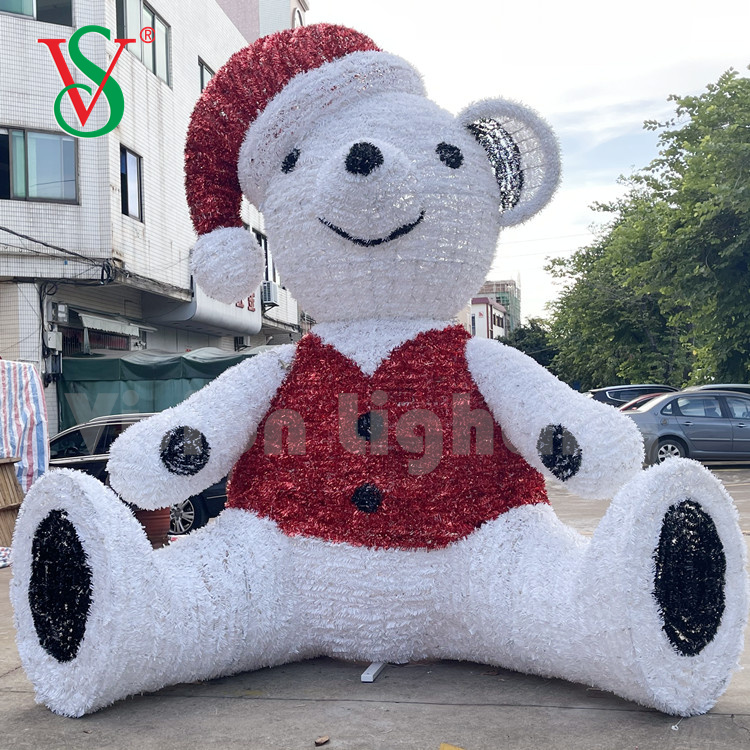
Creating a beautiful display is only half the battle. You must master spatial planning and crowd flow. We recommend dedicating a minimum of 150 to 200 square feet for a proper photo zone. Families need room to back up and capture the entire sculpture. You must account for stroller parking nearby. Establish clear queuing lines using stanchions or floor decals. Ensure the installation never blocks emergency egress routes. You also want to keep storefronts clearly visible and accessible.
Photographic optimization guarantees high-quality user-generated content. A bad photo rarely gets posted online. You must control the environment around the 3D animal light. Backdrop contrast plays a major role here. Position the bear against a non-distracting background. Avoid placing it directly in front of highly reflective glass or cluttered retail kiosks. You want the bear to pop against a clean visual canvas.
Ambient lighting requires careful balancing. You must harmonize the brightness of the display with the mall’s overhead lighting. If the display shines too brightly, smartphone cameras will underexpose the surrounding area. This leaves families' faces lost in deep shadows. If the mall lights are too bright, the motif loses its magical glow. Test the zone with various smartphone models during installation.
Consider implementing these photographic optimization strategies:
Interactive elements elevate the space from a simple viewing area to an immersive experience. Incorporate safe, non-electrified seating in front of the motif. A branded bench or a cluster of faux wrapped presents works perfectly. This seating encourages standardized, well-framed group posing. It also keeps toddlers seated and deters them from grabbing the electrical components.
Safety stands as the highest priority in commercial public spaces. Electrical safety begins with proper weatherproofing. We mandate IP65-rated connections, even for strictly indoor installations. Indoor mall environments still face water hazards. Commercial floor scrubbers spray water daily. Customers frequently spill large beverages. An IP65 rating protects the electrical components from these inevitable accidents.
Tripping hazards present significant liability risks. Cable management requires meticulous attention. You should never leave loose wires on a public floor. Route all power cables under ADA-compliant cable ramps. Alternatively, utilize a raised podium display. A custom-built platform keeps the wiring hidden underneath and completely out of public reach.
Structural stability demands strict engineering protocols. A giant display acts as a magnet for energetic children. They will inevitably lean on it or attempt to climb it. You must secure the base properly. Follow guidelines for specific weight-loading. If you cannot bolt the display directly into the mall floor, utilize hidden sandbags. Placing heavy weights inside the base frame prevents the motif from tipping over under sudden pressure.
Fire and public liability compliance keeps your insurance policies valid. You must proactively manage these regulatory requirements. Always demand proper documentation before purchasing.
Procuring a commercial-grade display requires a strategic approach to budgeting. You must weigh upfront costs against long-term longevity. Opting for the lowest-priced residential-grade yard decoration is always a false economy for high-traffic spaces. Residential displays break quickly under commercial wear and tear. They suffer from faded acrylics, burnt-out sections, and bent frames. Investing in commercial quality ensures the display remains a premium attraction for several seasons.
You must understand the realities of lead times and global logistics. Transparent assumptions about shipping timelines save you from last-minute panic. These displays qualify as oversized volumetric freight. Sea freight often takes 6 to 10 weeks globally. Customs clearances can add unpredictable delays. You need to secure early Q3 procurement for standard holiday rollouts. Late orders usually result in exorbitant air freight charges or missing your launch date entirely.
Storage considerations frequently catch facility managers off guard. You must evaluate how the motif behaves in the off-season. Can the installation be disassembled? Modular frames break down into smaller flat-packed sections. This saves massive amounts of space. Fully welded solid frames require dedicated, climate-controlled warehousing. Heat and humidity can damage wiring if left in an unconditioned storage container.
When you are ready to move forward, utilize a structured framework for requesting quotes. Contact vendors who specialize in giant teddy bear motif lights. Ask them explicitly for their warranty terms. Inquire about replacement bulb availability. Request a digital copy of the installation manual before signing the purchase order. This guarantees your facility team understands exactly what assembly requires.
| Procurement Evaluation Metric | Commercial Standard Requirement |
|---|---|
| Warranty Duration | Minimum 12-24 months on electrical components |
| Spare Parts | Vendor supplies 5% extra bulbs/rope light segments |
| Assembly Modularity | Frame separates into 3-5 manageable pieces |
| Documentation | Includes schematic, UL/CE certs, and rigging guide |
A successful family photo zone requires a careful balancing act. You must blend high-impact aesthetic appeal with rigorous commercial-grade safety and durability. Taking shortcuts on frame materials, electrical ratings, or spatial planning only leads to operational headaches. Properly executed installations capture the imagination of every passing family.
Remember that the right visual displays do more than decorate a space. They actively transform passive shoppers into active brand ambassadors. Every photo shared online extends your mall's visibility far beyond its physical walls. Families will travel further and stay longer when you offer them a compelling, memorable environment.
We encourage you to audit your upcoming seasonal floor plans today. Identify dead zones that could benefit from an injection of light and interactivity. Contact a commercial lighting specialist for a site-specific consultation. They can help you select the perfect motif to elevate your visitor experience this coming season.
A: Power consumption depends on the display size and LED density. However, commercial LED rope lights are highly efficient. A standard 10-foot giant teddy bear motif light typically consumes between 200 and 400 watts. This runs easily on a standard 15-amp commercial circuit without risking overloads.
A: Yes, provided they meet specific commercial specifications. You must ensure the electrical connections carry an IP65 or higher rating to prevent moisture ingress. Additionally, the outer acrylic or PVC mesh must be explicitly rated for cold weather to prevent cracking and brittle fracturing under freezing conditions.
A: Commercial displays use modular LED rope lights rather than series-wired string lights. If one small section fails, it does not darken the entire display. Your facility team can simply unplug the specific damaged rope light segment and connect a replacement piece using weatherproof twist-lock connectors.
A: While the physical bolting of modular frames is usually straightforward, safety remains paramount. Your in-house facility team can assemble the frame. However, electrical tie-ins, overhead rigging, and base load-testing often require certified facility teams or insured contractors to meet commercial public liability standards.


