
- Home
- Products
- About Us
- Custom Services
- Solutions
- Resources
- News
- Contact
Views: 0 Author: Site Editor Publish Time: 2026-08-31 Origin: Site


Stunning holiday displays captivate crowds easily. They transform ordinary public spaces into magical destinations. However, a complex engineering reality exists beneath this dazzling glow. Commercial buyers and municipal planners often struggle to evaluate a display based solely on aesthetic photos. You simply cannot judge outdoor resilience from a glossy catalog. Long-term performance in outdoor environments depends entirely on invisible manufacturing elements. Weld quality, material selection, electrical sealing, and frame durability dictate whether a structure survives harsh winters. You need robust construction to withstand heavy wind, freezing rain, and extreme temperature fluctuations. Our primary goal is straightforward. We will provide a transparent, engineering-focused breakdown of how commercial-grade outdoor 3D motif lights are manufactured. You will learn to distinguish between flimsy seasonal disposables and durable, multi-year assets. This guide empowers you to make informed, highly confident purchasing decisions for your upcoming municipal installations.
Material Selection is Critical: Commercial longevity requires rust-resistant frames (typically powder-coated aluminum) and UV-treated PVC.
Waterproofing Defines Lifespan: True outdoor resilience relies on IP65+ rated electrical connections and epoxy-sealed LED bulbs.
Customization Requires Lead Time: Factory-produced custom designs (like a large-scale 3D Christmas tree light) require specific CAD-to-fabrication workflows.
Hardware Agnostic Control: High-end motifs can often be integrated with open-source and commercial lighting software for synchronized displays.
Factories never guess structural integrity. Professional engineers translate 2D vector designs into rigorous 3D structural blueprints. They calculate weight balance carefully across every axis. Wind-load resistance remains an absolute priority for large public displays. A massive structure catches heavy gusts easily. Software simulates these environmental stresses before any fabrication begins. Public spaces carry strict safety regulations. Engineers must ensure the frame withstands unexpected gale-force winds. They map out the precise center of gravity. This meticulous planning prevents catastrophic tipping during severe winter storms.
Metal choice dictates the overall lifespan of the display. Buyers must evaluate materials wisely. Steel offers incredibly high tensile strength. It handles massive weight effectively. However, steel oxidizes rapidly if its protective coating chips. Rust compromises the structural integrity from the inside out. Conversely, aluminum serves as the gold standard for commercial outdoor displays. It naturally resists rust and corrosion. Aluminum also weighs significantly less than steel. Installers appreciate lighter frames during difficult setups. Lighter frames also reduce costly freight charges.
Table 1: Frame Material Comparison
Feature | Aluminum Frames | Steel Frames |
|---|---|---|
Rust Resistance | Excellent (Natural oxidation barrier) | Poor (Requires thick protective coatings) |
Weight Profile | Lightweight (Easier manual installation) | Heavy (Often requires heavy machinery) |
Tensile Strength | Moderate to High | Extremely High |
Commercial Suitability | Ideal for multi-year outdoor displays | Better for dry climates or indoor use |
Frame joints face immense stress during transit and seasonal installation. Factories must prioritize continuous seam welds. Spot welds often fail under repetitive tension. High-quality seam welds fuse the metal pieces completely. They prevent moisture from entering the hollow aluminum tubing. Complex geometries require smart modular engineering. Consider a multi-part 3D animal light sculpture. Factories section these large designs into modular pieces. You can bolt them together easily on-site. This clever modularity reduces shipping volume drastically. It also simplifies off-season storage inside crowded municipal warehouses.
Raw metal rarely survives severe weather unassisted. Factories apply protective powder coating over the aluminum. They bake this specialized coating onto the metal frame. The intense heat cures the powder into a rock-hard shell. This thorough process seals the metal against pervasive moisture. It also resists extreme temperature fluctuations effortlessly. Properly cured powder coating prevents blistering over time. Technicians often give the metal an acid bath before coating. This crucial wash removes grease and microscopic debris. A clean surface ensures the powder adheres flawlessly.
Commercial builds utilize different lighting formats for distinct visual impacts. Designers select specific lights based on the required aesthetic.
LED Rope Lights: These feature continuous PVC-encased tubes. They create solid, crisp outlines around the structure. The thick PVC protects internal diodes from blunt impact and UV degradation.
LED String Lights: These consist of exposed nodes on flexible wires. They provide excellent volumetric filling. They illuminate the deep interior core of a complex structure.
Designers often combine both types masterfully. They outline the outer silhouette using bright rope lights. They fill the core volume using clustered string lights. This dual approach creates a stunning three-dimensional depth.
Attaching lights requires immense precision and patience. Technicians contour thick rope lights tightly around sharp frame bends. They must manipulate the plastic carefully. Rushing this step causes internal copper wiring to fracture. A fractured wire creates frustrating dead zones. Proper securing methods also matter immensely. Cheap plastic zip ties become brittle under direct sunlight. They snap quickly in freezing weather. Commercial builds exclusively use UV-stabilized nylon cable ties. Some premium factories prefer specialized metal mounting clips. These durable fasteners ensure the lights stay firmly attached for multiple years.
Modern public displays go far beyond static illumination. Factories embed individually addressable RGB nodes directly into the frames. These smart LEDs allow for dynamic, programmable color displays. You can create complex animations and sweeping color changes easily. Integration requires careful hardware selection. Planners must consider software-driven light shows early in the process. These advanced setups use complex DMX controllers. They often require compatibility across open-source platforms like xLights. Smart nodes transform a static sculpture into a highly engaging digital canvas.
Water and electricity create a highly dangerous combination. Outdoor displays demand rigorous, uncompromising weatherproofing. IP ratings establish the absolute baseline for protection. Commercial displays require a minimum rating of IP65. The number six indicates complete protection against dust infiltration. The number five certifies protection against multi-directional low-pressure water jets. Rain, sleet, and melting snow will not penetrate IP65-rated enclosures. You should never compromise on IP ratings for public installations. Doing so invites catastrophic electrical failures.
Water exploits tiny gaps aggressively. It uses capillary action to travel up exposed wires. Factories combat this physical reality using epoxy-filled injection-molded caps. They seal the string light nodes completely during manufacturing. Epoxy hardens permanently around the internal diode. It forms an impenetrable moisture barrier. Connection joints represent another major vulnerability. Technicians slide heat-shrink tubing over all power joints. They apply waterproof dielectric grease before shrinking the tube. This dual-layer defense eliminates moisture intrusion completely.
Electrical safety remains non-negotiable in crowded public spaces. Displays utilize specific power systems to ensure safety.
Low-Voltage Systems (24V/36V): These represent the standard for public-facing displays. They significantly mitigate fatal shock hazards in wet conditions. You eliminate severe risks if a pedestrian touches a damaged wire accidentally.
Line Voltage (110V/220V): These robust power sources feed the main controllers safely. They rarely run directly through public touch-points.
Engineers must calculate voltage drop across massive installations. Power diminishes gradually as it travels through long wire runs. Factories incorporate power injection points periodically. These targeted injection points guarantee uniform brightness across every single LED bulb.
Custom designs begin with rigorous scoping sessions. Factories define strict size limitations first. They analyze optimal viewing angles based on expected pedestrian traffic. Site-specific power availability dictates the final lighting density. You cannot install a massive display if the venue lacks sufficient amperage. Clear parameters prevent costly redesigns later. The engineering team reviews local electrical codes thoroughly. They ensure the proposed installation meets all municipal safety guidelines.
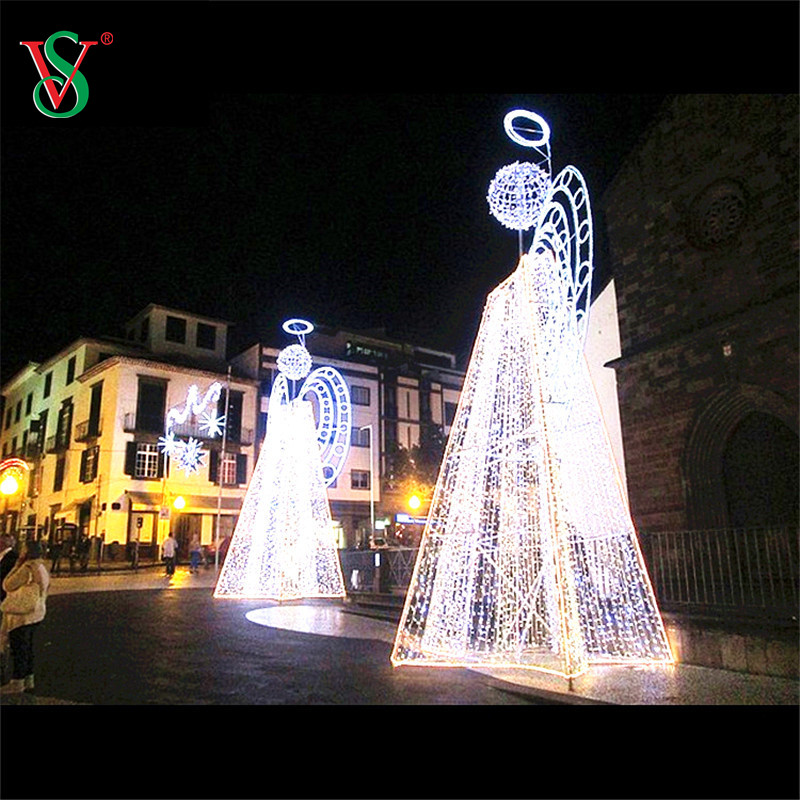
The custom workflow moves logically from concept to tangible prototype. Imagine developing a custom 3D angel motif light for a bustling municipal square. Engineers review the proposed lighting density meticulously. They measure exact bulb spacing to avoid ugly dark spots. Daytime aesthetics require equal attention. Unlit metal frames look industrial and bare during sunlight hours. Factories use tinsel, acrylic mesh, or PVC garlands to disguise these raw frames. This ensures the angel looks beautiful even at noon. You utilize this exact same aesthetic approach when designing a massive 3D Christmas tree light for a corporate plaza.
Transporting oversized motifs presents significant logistical hurdles. You cannot ship a thirty-foot sculpture in one solid piece. Factories design oversized motifs to fit neatly into standard shipping crates. They engineer highly precise bolt-together modular sections. On-site municipal crews assemble these sections using minimal specialized tools. Factory technicians apply color-coded stickers to each wiring harness. This color-coding prevents confusing electrical mismatches during installation. Modularity saves thousands of dollars in freight costs. It also ensures rapid deployment during tight holiday installation windows.
Not all factories deliver equal product quality. You must demand exact material specifications upfront. Ask the vendor for the precise frame thickness. Request the specific LED chip brand. Check the exact wire gauge used inside the ropes. Beware of manufacturers refusing to share verifiable IP ratings. Avoid vendors lacking structural wind-load estimates for their oversized builds. A truly reputable 3D Motif Light manufacturer operates transparently. They gladly share detailed engineering documents. They welcome rigorous technical questions.
Warranties indicate genuine factory confidence. A credible manufacturer offers a multi-year warranty covering all structural frames. They provide standard, clear warranties on all electrical components. Long-term maintenance requires easy access to spare parts. Ensure the vendor guarantees the future availability of exact-match replacement light strands. Minor electrical failures should not force you to discard the entire display. Stocking a few spare controllers and ropes saves immense frustration later.
Budget manufacturers cut corners silently. You must watch out for specific red flags during your vendor evaluation.
Inferior PVC: Thin plastic yellows quickly under intense UV light. It ruins the daytime appearance.
Exposed Wiring: You might spot exposed copper wires directly at the connection points. This guarantees a short circuit.
Cheap Paint: Painted iron frames chip easily upon minor impact. They lack the resilience of powder-coated aluminum.
These shortcuts lead predictably to rapid product failure. You will spend substantially more on emergency replacements than you initially saved.
Conclusion
The upfront purchase price represents only a small fraction of the overall investment. You must evaluate durability and maintenance overhead over three to five seasons. Flimsy, poorly built displays require constant repairs. They drain municipal budgets and frustrate installation crews. You secure lasting value by demanding rigorous engineering standards. Always prioritize powder-coated aluminum construction for outdoor environments. Demand verified IP65+ electrical sealing across all components. Choose modular designs when sourcing high-value, oversized displays. These critical elements guarantee longevity and sustained visual impact. Are you ready to upgrade your public spaces safely? Review our extensive catalog of commercial-grade motif lights today. Contact our engineering team directly for custom CAD design and fabrication consultations. We build robust displays meant to inspire awe for years.
A: No. Commercial motifs use advanced parallel wiring rather than outdated series wiring. If one LED fails in a parallel circuit, the electrical current bypasses the dead node completely. Modern factory builds isolate electrical failures effectively. Only a single bulb or a very small section goes dark. The rest of the beautiful display remains perfectly illuminated.
A: You must store them in dry, temperature-controlled environments. Avoid stacking heavy modular pieces without proper wooden crating. Stacking causes immense pressure on the delicate bottom frames. Additionally, never bend or manipulate PVC rope lights while they remain cold. Cold plastic becomes brittle and fractures easily. Always let them warm up before packing.
A: Yes, integration is highly customizable. Standard "dumb" LED motifs easily turn on and off via smart relays. Conversely, advanced RGB motifs feature individually addressable pixels. These require specific hardware decoders and controller protocols. Once properly configured, they sync flawlessly with popular light show software like xLights to create mesmerizing musical displays.
A: Custom manufacturing requires realistic timelines. Expect a four to eight week window for CAD design, metal fabrication, and rigorous quality testing. Transit time adds several more weeks depending on your geographical location. Early planning is absolutely essential. You should place orders in early Q2 or Q3 to ensure guaranteed delivery for Q4 installations.


