
- Home
- Products
- About Us
- Custom Services
- Solutions
- Resources
- News
- Contact
Views: 0 Author: Site Editor Publish Time: 2026-08-23 Origin: Site


Municipal and commercial planning has shifted dramatically over the past decade. Outdoor lighting is no longer just a basic utility for visibility. It now serves as a powerful catalyst for nighttime economics and civic identity. Strategically deployed RGB Outdoor Lighting transforms underutilized public spaces into safe, engaging, and economically viable destinations.
Cities face mounting pressure to revitalize downtown areas and parks after sunset. Proper illumination solves this by drawing crowds and fostering community interaction. Transitioning from static white light to dynamic RGB systems requires rigorous evaluation. You must assess hardware durability, software interoperability, and long-term maintenance requirements.
In this article, you will learn how vibrant illumination drives foot traffic and reinforces public safety. We will also explore specific hardware categories, critical technical specifications, and the realities of large-scale rollouts to ensure your next public project succeeds.
Dynamic lighting acts as a visual anchor, directly correlating with increased foot traffic and extended dwell times in public squares, parks, and retail districts.
Choosing between standard RGB and RGBW systems dictates the space's versatility, particularly when balancing decorative light shows with baseline pedestrian safety.
Enterprise-grade programmable RGB outdoor lights require standardized control protocols (like DMX or DALI) to avoid proprietary software lock-in.
Successful public rollouts hinge on physical durability (IK/IP ratings) and strict adherence to local light pollution and glare regulations.
Dynamic illumination directly fuels the nighttime economy. When cities install vibrant, colorful lighting, they create highly photographable landmarks. Visitors naturally gravitate toward these visually appealing areas. They take photos, share them on social media, and organically promote the city. This digital word-of-mouth increases foot traffic. Consequently, nearby restaurants, retail shops, and cafes experience extended operating hours and higher revenue. Lighting turns a simple pedestrian walkway into a destination.
Municipalities prioritize safety above all else. The principles of Crime Prevention Through Environmental Design (CPTED) dictate that well-lit spaces deter crime. Vandals and trespassers avoid areas with high visibility. However, standard white streetlights often feel sterile. Dynamic lighting adds immense value by adapting to real-time needs. City managers can increase brightness and shift to cooler color temperatures during late-night closing hours to disperse crowds safely. Conversely, they can use warm, inviting colors during community festivals. This flexibility ensures safety without sacrificing atmosphere.
Securing project approval requires a clear return on investment (ROI). You must align the interests of city councils, urban developers, and local citizens. Framing this ROI involves comparing the upfront capital expenditure (CapEx) of outdoor LED decorative lights against massive operational savings. Modern LEDs consume a fraction of the electricity used by legacy metal halide fixtures. Furthermore, the economic boost generated by increased civic utilization easily offsets the initial hardware costs.
Best Practice: Always present energy efficiency metrics alongside projected increases in local sales tax revenue when pitching lighting upgrades to municipal boards.
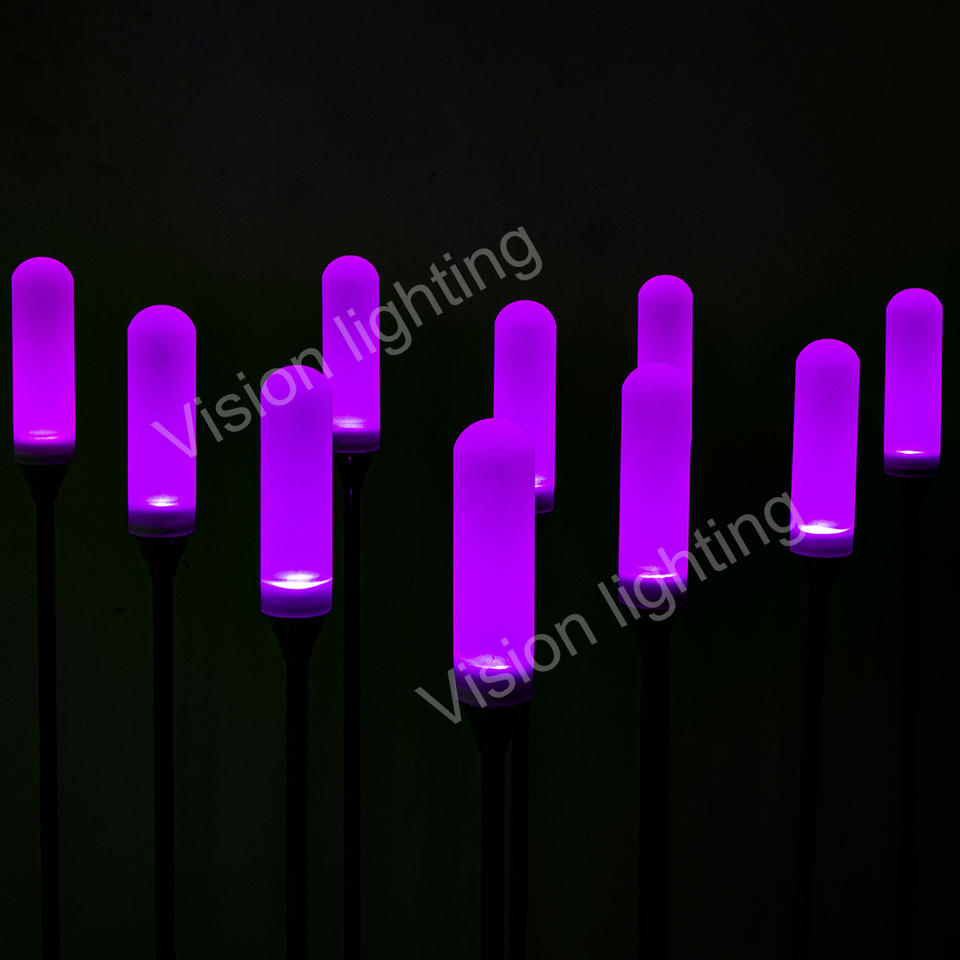
Natural environments require a delicate approach. Planners often deploy RGB landscape lighting in parks, botanical gardens, and pedestrian pathways. The goal is to enhance nature, not overpower it. Designers use subtle uplighting to accentuate tree canopies. They utilize grazing techniques to highlight the textured bark of ancient oaks. Low-glare path illumination ensures pedestrians can navigate safely without blinding spots. Successful landscape illumination respects the existing flora while providing a magical nighttime experience.
Public buildings, bridges, and historical monuments act as the canvas for architectural lighting. Wall washers and linear fixtures dominate this category. They cast wide, even beams of color across expansive vertical surfaces. You can use narrow-beam fixtures to highlight specific structural features like columns, arches, or suspension cables. Facade lighting transforms utilitarian infrastructure into sources of civic pride.
Sometimes, the light fixture itself becomes the attraction. Planners use 3D RGB motif lights to create high-impact, sculptural installations. These fixtures are ideal for seasonal events, winter festivals, and interactive public art focal points. Because they act as standalone artistic pieces, they command attention. Citizens often interact with them, walking through illuminated tunnels or posing next to glowing geometric shapes.
Choosing the right diode configuration is critical. Standard RGB fixtures mix red, green, and blue light to create a synthetic white. This often results in a muddy, purplish hue that fails to render natural colors accurately. Public spaces usually require RGBW systems. The "W" stands for a dedicated white LED diode. This allows the fixture to produce crisp, clean architectural white light for everyday safety. When the holiday or event ends, the space immediately returns to standard functional illumination.
Common Mistake: Installing standard RGB fixtures for path lighting. The synthetic white output drastically reduces the Color Rendering Index (CRI), making it difficult for pedestrians to identify faces or obstacles clearly.
Public infrastructure takes a beating. Extreme weather, accidental impacts, and intentional vandalism are constant threats. Therefore, hardware must meet rigorous international protection standards. Ingress Protection (IP) ratings dictate resistance to dust and water. Impact Protection (IK) ratings measure resistance to physical force. You must evaluate these ratings carefully before approving any fixture for public use.
Table 1: Essential Protection Ratings for Public Lighting Hardware
Protection Type | Minimum Recommended Rating | Practical Application in Public Spaces |
|---|---|---|
Ingress Protection (Water/Dust) | IP65 / IP67 | Protects internal electronics from heavy rain, sprinkler systems, and temporary submersion in flood-prone plazas. |
Impact Protection (Kinetic Force) | IK08 to IK10 | Withstands strikes from rocks, skateboards, and blunt force vandalism without shattering the lens or housing. |
Corrosion Resistance | Marine-Grade Coating | Prevents salt degradation in coastal cities or damage from de-icing chemicals used on winter walkways. |
Managing city-wide illumination requires robust software. When you invest in programmable RGB outdoor lights, you must evaluate the control protocols. Avoid closed-ecosystem applications. Proprietary software locks you into a single vendor. If that company goes out of business, your lighting grid becomes obsolete. Instead, demand standardized networks like DMX512 or DALI. DMX allows for complex, high-speed color changes ideal for light shows. DALI excels at broad scheduling and dimming across vast municipal grids. Both protocols ensure long-term scalability.
More light does not equal better lighting. You must analyze photometrics to ensure visual comfort. Planners evaluate beam angles to direct light precisely where needed. Tight beam angles (10-15 degrees) highlight specific architectural peaks. Wide flood angles (120 degrees) wash large plazas. Furthermore, you must establish strict glare thresholds. Improperly aimed fixtures blind pedestrians and create dangerous hazards for passing drivers. Always specify fixtures with deep recessed lenses or integrated louvers to shield the light source from direct view.
Environmental responsibility is no longer optional. Modern lighting designs must navigate local zoning laws and environmental codes. Dark Sky compliance is a major priority. This means fixtures must direct light downward, preventing upward spill that obscures the stars and disrupts nocturnal wildlife. Additionally, designers must manage horizontal light trespass. You cannot allow vibrant colors to spill into adjacent residential apartment windows. Precision shielding and automated midnight dimming schedules solve these compliance challenges.
Transforming a concept into reality involves significant physical labor. Installation complexities vary wildly based on the location. Greenfield installations in new parks allow for easy trenching and straightforward conduit routing. However, retrofitting historic public spaces presents massive hurdles. You cannot casually trench through 200-year-old cobblestone streets or drill into protected heritage facades. Installers must creatively hide cabling, utilize wireless data transmitters where possible, and employ non-destructive mounting brackets.
As lighting grids join the Internet of Things (IoT), cybersecurity becomes paramount. Municipal networks represent high-value targets for digital interference. Hackers gaining access to a city's remote-access lighting controllers can plunge public squares into darkness or flash erratic colors to cause public nuisance. IT departments must isolate lighting networks from broader city infrastructure. Implementing virtual private networks (VPNs), mandatory multi-factor authentication, and encrypted data transmission keeps the control system secure.
Attempting to upgrade an entire city's lighting at once invites disaster. Prudent municipalities utilize phased rollouts. They launch pilot programs to test hardware durability and community reception before committing to a city-wide adoption.
Follow these numbered steps for a successful pilot program:
Select a high-visibility location: Choose a central transit hub or a busy downtown plaza to maximize public exposure.
Deploy a localized network: Install the fixtures on a closed, temporary network to test software responsiveness.
Monitor physical wear: Inspect the fixtures weekly for signs of water ingress, vandalism, or heat degradation.
Gather community feedback: Solicit opinions from local businesses and residents regarding brightness, color choices, and safety perceptions.
Refine the master specification: Use the pilot data to adjust lumen outputs and beam angles before bidding out the final, large-scale project.
Not all lighting manufacturers understand public infrastructure. You must prioritize vendors with a demonstrated track record in high-traffic civic environments. A company that excels at residential backyard lighting will likely fail at lighting a municipal bridge. Ask for verifiable case studies. Look for vendors who have successfully completed projects involving public transit stations, urban parks, or large-scale commercial retail centers. Their experience with heavy public use is invaluable.
A standard consumer warranty is insufficient for municipal projects. You should demand a minimum five-year commercial warranty covering both the LED diodes and the internal drivers. Additionally, require a clear Service-Level Agreement (SLA) for the control software. If a critical network controller fails right before a major city festival, you need guaranteed troubleshooting response times. Clarify who bears the cost of labor if a defective fixture requires replacement via a bucket truck.
Never buy fixtures based solely on a catalog spec sheet. Insist on an on-site Proof of Concept (PoC). Lighting behaves differently in the real world than it does in a controlled laboratory. A mockup allows you to evaluate true color rendering and actual lumen output under environmental conditions. Ambient light from streetlamps, neon signs, and passing cars can easily wash out weak fixtures. Testing software usability on-site also ensures your city maintenance staff can easily operate the control panels. Seeing the exact beam spread against your specific architectural materials prevents costly design errors.
Defining a public space with dynamic illumination requires balancing aesthetic ambition with strict engineering pragmatism. Cities want beautiful, vibrant destinations, but they also need reliable, safe, and compliant infrastructure. By carefully evaluating hardware durability and prioritizing standardized control systems, planners can achieve both goals.
The right RGB infrastructure effectively bridges the gap between civic safety and community engagement. It deters crime while simultaneously inviting citizens to gather, celebrate, and support the local nighttime economy. Do not leave your nighttime urban planning to chance. We encourage urban planners, architects, and municipal engineers to download a comprehensive technical specification checklist or schedule a photometric design consultation to confidently map out your next public space project.
A: RGB fixtures mix red, green, and blue diodes to create a synthetic, often purplish white. RGBW fixtures include a dedicated white LED. This allows them to produce true, clean architectural illumination for everyday safety, while still offering vibrant colors for events.
A: Municipalities use centralized controllers connected via standardized protocols like DMX512 or DALI. Operators use cloud-based scheduling software to trigger automated color changes, set daily dimming routines, or run complex, frame-by-frame light shows across the entire network.
A: Yes, provided they are specified correctly. Compliance requires fixtures with precise beam control, internal louvers, and physical shielding to prevent upward light spill. Automated software schedules also help by dimming or turning off non-essential colors late at night.
A: Absolutely, if you select commercial-grade hardware. Public fixtures must carry high IK impact ratings (IK08+) to resist blunt force vandalism. They also require marine-grade coatings and IP65+ ingress protection to survive harsh weather and constant physical wear.


