
- Home
- Products
- About Us
- Custom Services
- Solutions
- Resources
- News
- Contact
Views: 0 Author: Site Editor Publish Time: 2026-08-04 Origin: Site


Buyers finalizing purchases for commercial or residential outdoor lighting often get stuck between IP65 and IP67 ratings. You must balance upfront costs against the risk of premature failure. Over-specifying drains the budget needlessly. Conversely, under-specifying leads to electrical shorts, safety hazards, and rapid replacement costs after the first heavy storm. Providing a clear, evidence-based decision framework helps you choose the right ingress protection for specific installation environments. By evaluating your true environmental risks, you can confidently source components like IP65 outdoor decorative lights without second-guessing their durability. In this guide, we break down exactly what these ratings mean in real-world conditions. We will explore manufacturing cost differences, hidden system vulnerabilities, and specific use cases for each rating. You will learn how to audit your zones to ensure long-lasting, safe, and beautiful displays.
The International Electrotechnical Commission (IEC) standardizes ingress protection ratings globally. These ratings remove the guesswork from waterproof claims. You can rely on objective laboratory testing rather than vague marketing terms. We must break down the two digits to understand your actual protection level.
Both ratings start with a "6" as their baseline. This first digit measures solid particle protection. A level 6 means the housing is completely dust-tight. Engineers test this by placing the fixture in a vacuum chamber filled with circulating talcum powder. Absolutely no dust penetrates the housing. You never have to worry about dirt, pollen, or sand ruining the internal circuitry.
The critical difference emerges in the second digit. This number measures liquid ingress protection. The "5" in IP65 stands for protection against low-pressure water jets. Labs test this using a 6.3mm nozzle spraying water from every possible direction. It easily handles heavy rain, automated lawn sprinklers, and standard weathering. Most residential installations face exactly this type of exposure.
The "7" in IP67 introduces a completely different testing standard. This digit certifies protection against temporary submersion. Testers lower the fixture into a water tank up to one meter deep. They leave it there for exactly 30 minutes. If no harmful amount of water enters the casing, it earns the rating. It handles puddles, flooded garden beds, and melting snow.
We must emphasize a crucial trust and transparency note here. Neither rating implies permanent underwater use. Plunging these fixtures into a swimming pool or decorative pond permanently will eventually cause failure. Continuous underwater pressure forces moisture past standard seals. Permanent submersion always requires an IP68 rating featuring specialized marine-grade resins.
Ingress Protection Comparison Matrix
| IP Rating | Water Test Conditions | Typical Weather Resistance | Maximum Water Exposure |
|---|---|---|---|
| IP65 | Low-pressure jets (6.3mm nozzle) from all angles | Heavy rainfall, wind-driven rain, standard sprinklers | Surface flow and splashing; no standing water |
| IP67 | Submersion up to 1 meter deep for 30 minutes | Flooded landscaping, severe snowmelt, heavy pooling | Temporary immersion; must dry out periodically |
You do not always need maximum protection. Over-engineering your lighting plan simply wastes money. Knowing exactly when to deploy the standard protection level keeps projects on budget. Elevated placements represent the perfect environment for this rating.
Installations along eaves, pergolas, and building facades rarely encounter standing water. Gravity acts as your primary waterproof mechanism here. Rain hits the fixture and immediately drips off. High tree branches offer similar natural drainage. As long as water cannot pool around the diodes or connectors, you face minimal ingress risk.
Cost efficiency drives this decision for most buyers. IP65 serves as the standard benchmark for a high-quality outdoor LED decorative light. Manufacturers produce these efficiently without expensive epoxy potting processes. This rating meets 80% to 90% of typical seasonal and architectural lighting needs. You achieve brilliant illumination without inflating overall project costs.
Implementation reality proves this out every winter. Cities and homeowners use standard weatherproof Christmas lights hung in the open air. Wind, rain, and light snow bounce right off the PVC jackets. They perform flawlessly for seasons on end when mounted correctly.
However, you must recognize their distinct limitations. You will experience rapid failure if you install them incorrectly. We see frequent breakdowns when buyers ignore basic environmental factors.
Certain environments aggressively attack electrical equipment. Ground-level installations fundamentally change the rules of water exposure. Water pools, soil saturates, and drainage slows down. You must upgrade your protection level when facing these harsh realities.
Ground-level risks destroy standard strings quickly. Installations in mulch beds or lawn edges sit directly in the flood zone. Heavy downpours overwhelm soil absorption rates. This creates temporary puddles that completely engulf your fixtures. Mulch also retains moisture for days, keeping the wires constantly damp.
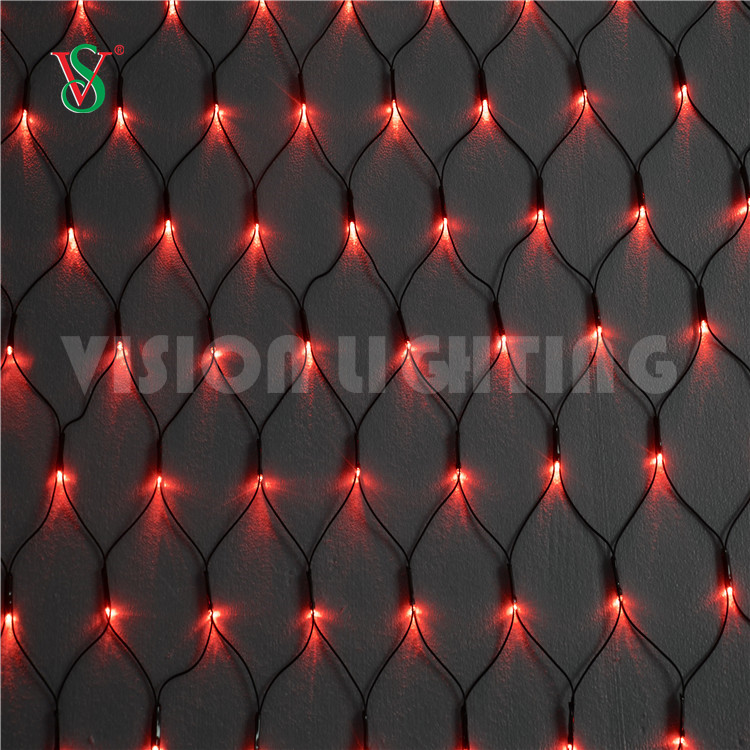
Specific form factors also dictate your requirements. Shrubs and bushes often sit in landscape depressions prone to flooding. Wrapping them safely requires specialized gear. This is where an IP67 net light becomes a strict safety requirement. Ground-faults happen instantly when inferior nets sit in a flooded bush.
Extreme winter climates present hidden submersion risks. Snow itself rarely harms equipment. The danger arrives during the melt. Heavy snow banks bury your displays for weeks. As temperatures rise slightly, the snow turns into a dense slush. This ice-water bath surrounds the fixtures entirely, acting identically to a tank submersion test.
Proximity to water features requires extreme caution. Walkways near decorative ponds, fountains, or pools face unique hazards. Splashing occurs constantly. Runoff frequently covers the surrounding pathways. You cannot trust basic rain-rated gear here.
Follow this numbered assessment to determine if your landscape requires an upgrade:
Understanding why superior ratings cost more helps justify the purchase. Manufacturers invest heavily in advanced sealing technologies. Upgraded fixtures utilize heavier gauge wire to resist physical damage. Factories inject clear resin directly into the diode caps to displace all air. They also utilize watertight threaded connectors featuring thick silicone O-rings.
These manufacturing realities increase production times and material costs. The premium you pay directly reflects this intensive engineering process. You must decide if this premium aligns with your project goals. We utilize a straightforward decision framework based on cost versus lifespan.
Short-term and seasonal uses rarely justify the premium. If you hang displays for six weeks and store them indoors, standard protection yields the highest return on investment. The fixtures simply do not face enough cumulative exposure to warrant expensive resin-filled diodes.
Permanent, year-round commercial installations change the math entirely. Restaurants, city squares, and event venues leave fixtures exposed 365 days a year. Here, upgraded protection drastically reduces maintenance labor. You stop paying technicians to hunt down short circuits. You eliminate frequent replacement purchases. The higher initial capital expenditure pays for itself through reliable, zero-touch operation.
The risk of neglect carries severe financial consequences. Ignoring proper IP ratings leads to immediate system failures. Water intrusion causes Ground Fault Circuit Interrupter (GFCI) outlets to trip constantly. This localized grid failure shuts down entire sections of your property. Furthermore, using a lower-rated fixture in a submersion environment immediately voids supplier warranties, leaving you to cover the replacement bill.
Project Decision Framework Chart
| Project Type | Environment | Recommended Rating | Primary Benefit |
|---|---|---|---|
| Seasonal Residential | Elevated rooflines, trees | IP65 | Maximum cost efficiency |
| Seasonal Residential | Ground borders, bushes | IP67 | Prevents GFCI tripping in snow/puddles |
| Permanent Commercial | Patios, high facades | IP65 | Balances durability with budget |
| Permanent Commercial | Landscaping, walkways | IP67 | Lowers maintenance and replacement labor |
Buyers often focus obsessively on the light string itself. They secure a high-quality fixture but ignore the surrounding infrastructure. An ingress rating is only as strong as its weakest link. Overlooking system components compromises your entire investment.
The connector trap ruins countless installations. You might purchase a premium string, but examine the plug. If the power supply, splitters, or extension cables only carry an IP44 rating, your whole system remains vulnerable. Water inevitably finds the weakest entry point. It seeps into cheap push-fit connectors, causing immediate corrosion and shorts. Always verify that every component matches or exceeds your baseline requirement.
Ultraviolet (UV) degradation represents a silent killer. A high water-resistance rating does not guarantee UV resistance. Constant sunlight slowly bakes cheap PVC wire jackets. The plastic becomes brittle and cracks open. Once the jacket splits, rain easily bypasses the original factory seal. You must look for rubber or silicone-based jackets for permanent, sun-exposed setups.
Verifying claims protects you from unverified sellers. The market floods with exaggerated specification sheets. Anyone can type "Waterproof" on a box. You must demand proof. Look for third-party lab certifications alongside the IP rating. Marks from UL, CE, or ETL confirm that independent engineers actually tested the product. They guarantee the fixtures perform exactly as advertised under pressure.
Choosing the correct ingress protection ultimately comes down to location and gravity. You can safely default to IP65 for elevated, open-air setups. This strategy saves your budget while providing excellent weather resistance. You should upgrade to IP67 strictly for ground-level, flood-prone, or heavy snow placements where water accumulates.
Your next steps require a physical walk-through. Audit your installation zones carefully. Separate your elevated rooflines from your ground-level flower beds. Calculate the linear footage required for each distinct zone. Finally, thoroughly check the IP rating of all required power supplies, controllers, and extension cables before adding items to your cart. Matching the right tool to the right environment guarantees a flawless display.
A: Yes, if elevated and protected from pooling water. They handle seasonal rain and wind effortlessly. However, UV exposure will eventually affect the cable jacket's lifespan. Choose UV-resistant silicone materials if you plan a permanent, year-round installation in direct sunlight.
A: No. IP67 is for temporary submersion up to 30 minutes in shallow water. It protects against puddles and floods. Permanent underwater use in ponds or pools requires IP68 fixtures, which feature specialized marine-grade sealing to handle continuous water pressure.
A: Light snow is fine and easily sheds off. However, melting snow banks that completely engulf the fixtures act exactly like a submersion test. This slushy scenario requires IP67 protection to prevent water ingress and electrical shorts.
A: Water intrusion typically trips your GFCI or RCD outlet immediately to prevent electrocution. This safety mechanism renders the entire string inoperable. You must disconnect the system, dry out the affected connections completely, and reseal them before restoring power.


