
- Home
- Products
- About Us
- Custom Services
- Solutions
- Resources
- News
- Contact
Views: 0 Author: Site Editor Publish Time: 2026-07-05 Origin: Site


Harsh winter weather can easily destroy poorly made event displays. Flimsy materials and bad wiring turn expensive holiday installations into major liabilities. We often see event organizers struggle when generic lawn ornaments fail mid-season. Commercial-grade installations demand robust equipment. Professional winter events, retail displays, and high-end residential landscapes require specialized lighting to survive freezing temperatures and heavy snow. You need industrial-strength solutions rather than temporary consumer-grade decorations. This comprehensive checklist serves as your decision-making framework. You will learn how to evaluate frame materials, determine proper scale, and verify critical weatherproofing standards before you purchase. We guide you through everything from IP ratings to wind-load mitigation. By following this guide, you ensure your holiday displays remain brilliantly lit, structurally sound, and perfectly safe throughout the entire winter season.
Buyers often fall into a predictable replacement trap. They purchase cheaper, uncertified decorations to save money upfront. These consumer-grade units usually fail after one season. Wiring snaps in the cold. Frames buckle under moderate snow. You then have to buy replacements every single year. A commercial-grade 3D motif light eliminates this frustrating cycle. It provides multi-season durability and structural peace of mind.
A successful deployment requires strict operational standards. You must define what failure looks like to avoid it. We look for three main success indicators during any winter event.
You must demand technical transparency from your suppliers. Reliable manufacturers will provide detailed specifications. They never rely solely on aesthetically pleasing photos. Ask for data sheets on wire thickness, frame gauge, and diode types. This technical evidence proves the product is truly event-grade.
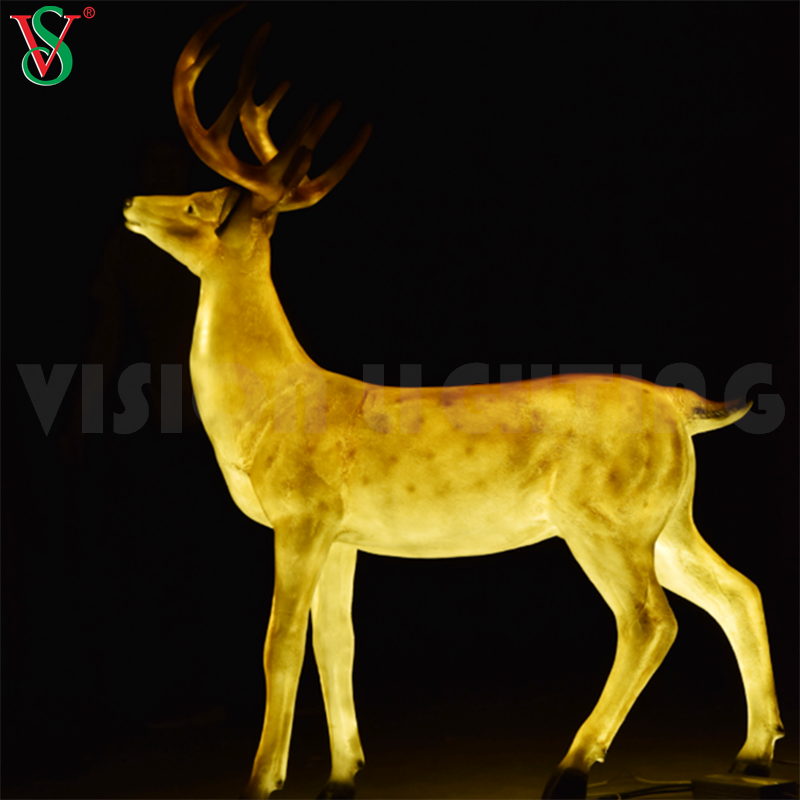
Your climate should directly dictate your material choice. Different frames behave differently under ice, snow, and wind stress. You must evaluate the physical construction before considering the lights.
A commercial fiberglass reindeer light offers incredible resilience. It provides a solid, beautiful appearance even during the daytime.
Metal and mesh frames are incredibly popular for dynamic installations. They often feature iridescent materials for spectacular nighttime effects. You must evaluate these frames based on their rust resistance.
Material Decision Matrix
| Climate Condition | Recommended Material | Reasoning |
|---|---|---|
| Heavy Snow & Freezing Rain | Fiberglass | Rigid structure prevents collapse under heavy ice loads. |
| High Coastal Winds | Mesh / Open Metal | Allows wind to pass through, reducing the blow-over risk. |
| Mild Winter / Indoor Atriums | Acrylic | Offers brilliant light diffusion in controlled environments. |
Water and electricity create a dangerous combination. Event planners cannot rely on vague marketing terms like "water-resistant." You need proven, tested weatherproofing metrics. Every Christmas reindeer motif light must pass a strict electrical checklist.
The Ingress Protection (IP) rating system defines a product's sealing effectiveness. The first digit represents solid particle protection. The second digit represents liquid ingress protection.
Never buy a fixture missing an official IP number. Vague claims usually mean the product will fail during a rainstorm.
Your lights are only as strong as their weakest connection point. You must evaluate the power adapters carefully. Examine the end-to-end connectors. They should feature threaded, rubber-gasket seals. The cabling itself must be outdoor-rated. We require UV-resistant PVC jackets. Standard indoor wires become brittle in freezing temperatures. They crack, expose live wires, and create fire hazards.
Moisture kills LEDs quickly. You must check how the manufacturer seals the diodes. The best commercial displays use epoxy-filled, single-mold LEDs. This design completely blocks moisture penetration. You should also assess the cold-weather performance claims of the LED chips. Quality chips will maintain their brightness even at twenty degrees below zero.
Many installers wrap exposed power connections in standard duct tape. Duct tape traps moisture inside the connection. It actually accelerates electrical shorts. Always use dielectric grease and proper weatherproof junction boxes.
Size matters immensely in commercial staging. A gorgeous decoration loses its impact if it looks tiny from the street. You must match the physical scale to your specific viewing distances.
Pedestrian areas require human-scale displays. We typically use 48-inch models for walking paths, sidewalks, and entryways. People can appreciate the intricate details up close. Highway-facing retail centers demand massive scale. Displays meant for drive-by viewing must be at least 72 inches tall. We often recommend 8-foot models for large public squares. Anything smaller simply disappears visually.
Never place a single, isolated light in the middle of a massive lawn. It looks like a floating, disconnected shape. We advise purchasing these lights in families or groupings. Combine a stag, a doe, and a fawn. This strategy creates visual depth. It anchors the scene and provides necessary visual weight.
Measure your intended installation zones carefully. You want to avoid overcrowding a small courtyard. You also want to avoid underwhelming a massive plaza. Use visual markers like traffic cones to simulate the footprint before ordering. This ensures the proportions feel natural within your landscape architecture.
Even the most expensive displays will tumble in a storm if installed incorrectly. Wind represents the greatest physical threat to outdoor event decor. You must plan for aggressive weather.
Let us acknowledge a harsh implementation reality. No outdoor 3D reindeer lights are completely immune to high winds. They act like giant sails. If you do not anchor them properly, they will blow over. This damages the lights and creates a severe safety liability.
You must select the right anchoring system for your terrain.
Safe electrical distribution prevents disasters. You must calculate your total amperage loads carefully. Never daisy-chain too many displays onto a single circuit. Always use GFCI (Ground-Fault Circuit Interrupter) outlets for outdoor installations. These outlets instantly cut power if water causes a short. Furthermore, you must weather-seal all extension cord connections. Use protective plastic clamshell covers to keep connections completely dry.
You are making a significant infrastructural investment. You must vet your suppliers rigorously. Do not treat this like a casual retail purchase.
Demand specific guarantees from a supplier before placing a bulk order. We always check three main criteria.
Do not commit to a massive event rollout blindly. Ask the supplier for a detailed specification sheet. Review their Bill of Materials (BOM) to verify wire gauges and metal types. Finally, request a single physical sample. Test this sample in your own environment. Spray it with a hose. Leave it in the cold. Inspect the welds closely. Only sign the bulk purchase order after the sample passes your tests.
The success of your winter event display depends entirely on your mindset. You must treat outdoor 3D reindeer lights as robust infrastructural investments. They are not disposable seasonal decorations. High-quality materials and rigorous weatherproofing ensure your displays shine brightly through the darkest, coldest months.
A: You need an IP44 rating as the absolute baseline. This protects against splashing water from any direction. However, we strongly recommend an IP65 rating for unprotected, harsh winter environments. IP65 fixtures withstand direct water jets, heavy snowmelt, and intense ice accumulation without failing.
A: You cannot use traditional ground stakes on hardscapes. Instead, attach the display to custom, heavy steel base plates. You can also use heavy-duty sandbags draped over the bottom frame rails. For massive displays, consider structural tethering. Secure guy-wires to nearby fixed structures, pillars, or weighted concrete barricades.
A: It depends entirely on the manufacturing style. String-wrapped metal frames usually allow you to replace individual bulbs easily. However, embedded acrylic or solid fiberglass models typically feature sealed internal wiring. These specialized models often require you to replace entire lighting sections or send the unit in for repair.
A: You must prioritize climate-controlled, dry storage spaces. Moisture and extreme heat degrade wire jackets over time. Clean the frames thoroughly before packing them away. Ensure they are completely dry to prevent hidden rust. Proper off-season storage drastically prolongs both the wiring and the material lifespan.


