
- Home
- Products
- About Us
- Custom Services
- Solutions
- Resources
- News
- Contact
Views: 0 Author: Site Editor Publish Time: 2026-08-28 Origin: Site


High-impact seasonal events require lighting setups capable of massive scale. The gap between consumer-grade string lights and commercial-scale RGB Outdoor Lighting is vast and unforgiving. Event planners, resort managers, and property owners face a frustrating choice. They either endure recurring labor costs of temporary installations or risk large budgets on permanent setups. Misjudging hardware durability or software reliability routinely leads to catastrophic mid-event failures. This article provides a vendor-neutral framework to evaluate, shortlist, and implement scalable lighting systems. You will discover practical methods for selecting resilient hardware and building robust control networks. Ultimately, we will help you deliver reliable returns on your investment without compromising design impact.
Transitioning from temporary seasonal setups to permanent, programmable systems eliminates recurring installation labor and maximizes year-round ROI.
Hardware evaluation must prioritize IP65+ weatherproofing, independent pixel control, and reliable power distribution (avoiding voltage drop).
Software ecosystems dictate usability; prioritize mesh-networked or hardwired controllers over standard WiFi for commercial reliability.
Local compliance matters—successful deployments preemptively address HOA bylaws, light pollution ordinances, and zoning rules.
Commercial venues evaluate lighting investments based on long-term labor savings. Annual put-up and tear-down cycles consume massive operational budgets. Hiring crews to string temporary outdoor LED decorative lights drains resources quickly. Lifts must be rented. Staff must work dangerous hours on ladders. Permanent track systems require a higher upfront capital expense. However, they eliminate recurring seasonal labor entirely. Once installed, teams simply activate new presets from a smart device.
Year-round utilization transforms these fixtures from holiday novelties into versatile architectural assets. Permanent fixtures transition seamlessly across different seasons. You can program patriotic red, white, and blue for the 4th of July. You can shift to orange and purple for Halloween. Winter holidays unlock dynamic snow-fall effects. Software presets make these transitions instantaneous. You avoid physically touching a single bulb.
Scalability remains the dividing line between consumer retail kits and commercial systems. Retail kits operate as closed loops. You cannot easily expand them. Commercial venues like resorts and event spaces require extensible frameworks. They need systems capable of synchronizing thousands of independent pixels across multiple buildings. Extensible hardware allows property managers to add new lighting zones next season. They can integrate new areas into the same central control dashboard easily.
Feature | Temporary Setups | Permanent RGB Installations |
|---|---|---|
Installation Labor | High recurring annual costs | Zero recurring costs after day one |
Event Transition Speed | Days or weeks | Seconds (via software preset) |
System Scalability | Poor (closed loops) | High (unlimited expansion) |
Weather Vulnerability | High (exposed wires) | Low (protected architectural tracks) |
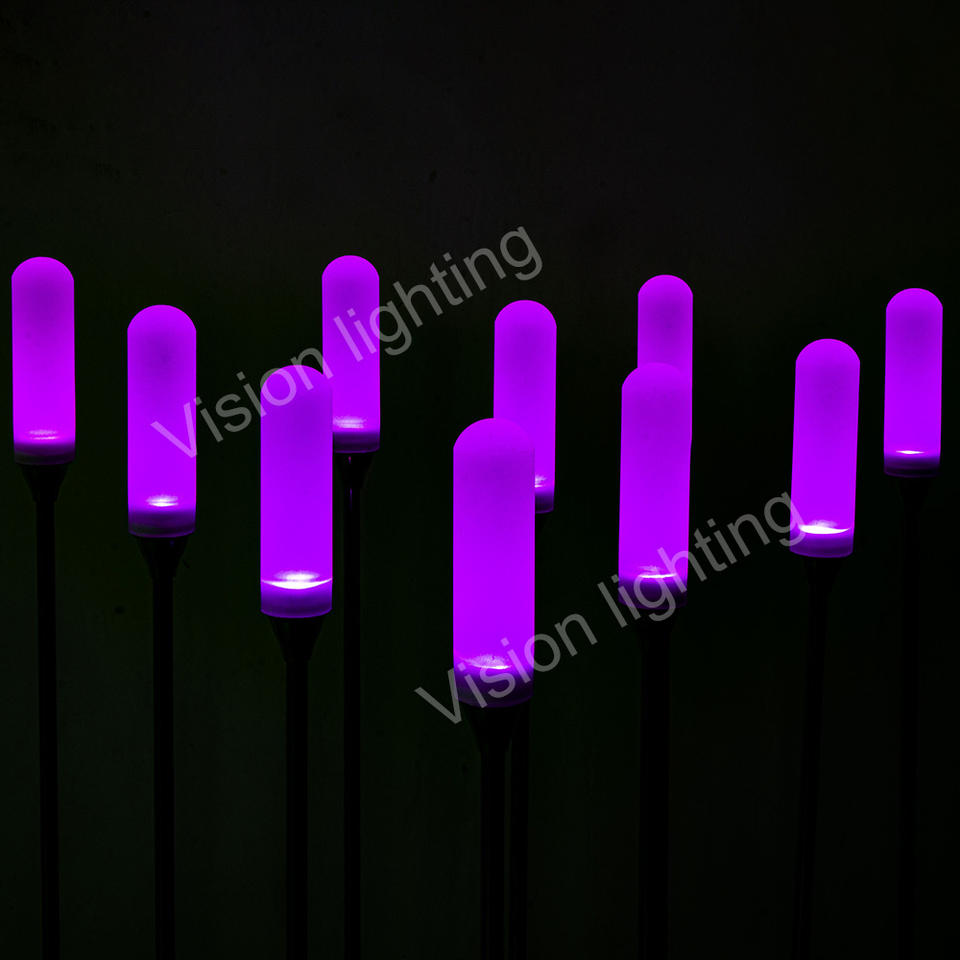
Hardware durability dictates system survival. We must prioritize strict weatherproofing standards. An IP65 rating serves as the absolute minimum requirement. This rating ensures dust tightness and protection against low-pressure water jets. However, certain environments demand IP67 protection. Ground-level installations face temporary submersion during heavy rain. Coastal environments endure corrosive salt spray. In these harsh conditions, IP67 becomes non-negotiable. Additionally, you must evaluate the wiring. UV-resistant cabling prevents plastic sheaths from cracking during intense year-round sun exposure. Bare wires invite moisture and cause catastrophic short circuits.
Controller connectivity often fails during large events. Standard 2.4GHz WiFi struggles in crowded spaces. Thousands of guest smartphones emit competing signals. This interference causes massive latency. Lights fail to respond to commands. To guarantee reliability, commercial deployments mandate stronger protocols.
Mesh Bluetooth: Creates a localized network independent of standard routers.
DMX Controllers: Uses industry-standard signaling for professional live events.
Hardwired Ethernet: Provides the ultimate zero-latency connection for permanent base stations.
Lumen output and color accuracy directly impact aesthetic quality. You must evaluate the difference between RGB and RGBW hardware. Standard RGB chips mix red, green, and blue to simulate white. This mixture often creates a muddy, bluish tint. RGBW systems include a dedicated white diode. This extra diode produces true, crisp architectural white light. Furthermore, you must assess brightness consistency across long cable runs. Low-quality wires lose voltage rapidly. This loss causes the end of a light string to appear visibly dimmer than the beginning.
Architectural track lighting serves as the foundation for permanent building outlines. Installers mount discrete aluminum tracks directly into the roofline fascia. These tracks hide the wiring completely. The bulbs point downward to create stunning wall-washing effects. During the day, the color-matched tracks remain invisible. This approach easily bypasses restrictive community guidelines while providing powerful night illumination.
Ground-level features require robust RGB landscape lighting. Spotlights, path lights, and heavy-duty wall washers highlight trees and tents. They accentuate architectural features effectively. A common mistake involves positioning up-lights incorrectly. Poor angles blind walking guests. We recommend placing fixtures at a 45-degree angle. You should utilize anti-glare shields to direct photons only onto the target object.
Event organizers often need striking visual centerpieces. 3D RGB motif lights fill this role perfectly. These programmable wireframe structures create oversized focal points. Guests gravitate toward them for photo opportunities. You can map complex animations across these motifs. They serve as highly shareable social media backdrops for any seasonal festival.
High-density string and matrix lights handle complex overhead designs. Event staff wrap tree trunks tightly. They suspend dense grids to form dynamic canopy ceilings. Matrix designs allow you to map low-resolution videos or moving text across the lights. These high-density arrays immerse guests completely.
Community guidelines frequently derail ambitious lighting projects. Homeowners Associations (HOAs) usually ban visible "holiday lights" outside of December. To bypass these restrictive rules, implement discrete track systems. You select aluminum channels painted to match the building's trim exactly. The tracks secure the bulbs out of direct sight. During daylight hours, inspectors see nothing but standard rooflines. We advise presenting architectural schematics to the HOA board before installation. Emphasize the system's invisibility and architectural integration.
Light pollution generates severe nuisance complaints. Many municipalities enforce Dark Sky ordinances. They fine properties emitting excessive glare. You must implement strict software schedules to remain compliant. Program the system to reduce overall brightness by 50% at 10 PM. Schedule a complete shutdown by midnight. Automatic dimming prevents neighbors from filing formal complaints. It demonstrates respect for the surrounding residential ecosystem.
Temporary commercial event lighting sometimes triggers municipal permit requirements. Erecting massive truss structures for overhead matrices often requires structural engineering reviews. Trenching temporary power lines across public walkways triggers electrical inspections. You must contact local zoning offices early. Outline your hardware plan clearly. Confirm whether your temporary setup mandates special event permitting. Ignoring these rules invites mid-event shutdown orders.
Voltage drop represents the most common technical failure in large arrays. Direct current (DC) loses power as it travels through long copper wires. If you run 200 pixels in a single line, the last 50 pixels receive inadequate power. When you set the entire line to pure white, the end pixels fade into a sickly pink or yellow. To prevent this, you must plan power injection points. Installers route secondary power lines parallel to the data lines. They inject fresh power every 50 to 100 nodes. This technique ensures absolute color accuracy across unlimited distances.
Software ecosystems require careful evaluation. You must avoid proprietary software lock-in. Closed systems force you to buy expensive replacement parts from one manufacturer forever. Seek platforms utilizing open-source protocols like WLED, Art-Net, or sACN. Next, evaluate the app interface. Non-technical event staff will operate these controls daily. The dashboard must feature simple sliders and intuitive preset buttons. Overly complex software frustrates seasonal employees and increases operating errors.
Cable management prevents severe trip hazards. High-foot-traffic areas demand strict safety protocols. Never leave exposed power cables on walking paths. Route data and power lines overhead whenever possible. When ground routing becomes unavoidable, utilize heavy-duty, ADA-compliant cable ramps. Securely tape all vertical wire runs against tent poles or structural columns. Loose cables snap easily under tension, instantly killing entire lighting zones.
Securing a massive lighting package requires cautious validation. You should never commit to a site-wide purchase blindly. Always request a single-controller proof of concept (POC) demo kit first. A demo kit lets your team test the software interface directly. You can inspect the physical build quality of the nodes. You can verify the actual lumen output against the manufacturer's claims. Testing one small zone prevents costly, large-scale mistakes.
Warranty structures separate consumer toys from commercial infrastructure. Retail hardware typically offers a limited 1-year warranty. Commercial integrators provide 5-to-10-year guarantees. You must verify exactly what the warranty covers. Does it replace dead pixels? Does it cover the labor required to swap out a faulty controller? Robust commercial support ensures your investment survives multiple brutal winter seasons.
When interviewing providers, you must ask precise technical questions to gauge their expertise. We recommend asking the following:
"Are the LEDs individually addressable, or do they only change color in large blocks?"
"What is the exact IP rating of the controller housing, not just the bulb casing?"
"Can this system integrate directly with standard DMX boards for our live concert events?"
Effective seasonal event lighting hinges on a major mindset shift. You must treat this purchase as a long-term infrastructure investment. It is not a disposable temporary decoration. Prioritizing robust IP65 hardware and resilient connectivity networks guarantees operational survival. Avoiding voltage drop and planning for power injection ensures visual perfection. Using open-protocol software empowers your team to adapt designs quickly without relying on expensive technicians.
We encourage you to audit your site immediately. Measure the linear footage of your primary event structures. Evaluate your existing outdoor power availability. Next, consult with a commercial lighting integrator. Map out a small pilot project. Testing a single zone this season lays the foundation for a spectacular, site-wide deployment next year.
A: Yes. You can leave them up year-round if they feature an IP65+ rating and utilize UV-treated wiring. For maximum durability, mount them inside permanent architectural tracks to shield the hardware from direct sun and heavy ice accumulation.
A: RGB mixes red, green, and blue diodes to create an imperfect, bluish white. RGBW hardware includes a dedicated, separate white diode. This extra chip provides pure, crisp architectural illumination required for high-end commercial spaces.
A: Avoid relying on standard 2.4GHz router WiFi. Thousands of guest smartphones will crowd the bandwidth and cause massive lag. Instead, utilize localized mesh networks, dedicated access points, or hardwired DMX/Ethernet controllers for zero-latency reliability.
A: Usually no. They will only sync if both systems utilize the same underlying smart protocol, such as WLED or a unified commercial DMX universe. You must always verify software ecosystem compatibility before mixing hardware brands.


