
- Home
- Products
- About Us
- Custom Services
- Solutions
- Resources
- News
- Contact
Views: 0 Author: Site Editor Publish Time: 2026-08-17 Origin: Site


Commercial holiday installations carry incredibly high stakes. Sourcing large-scale seasonal decor requires you to balance visual impact against strict safety, budget, and logistical limits. Residential-grade options currently flood the market. However, commercial venues like shopping malls, public plazas, and hotels demand heavy-duty, scalable solutions. You need robust displays to drive foot traffic and boost social engagement during the holy month. This guide breaks down the essential procurement criteria for sourcing commercial Ramadan moon star lights. We will explore how to select the right form factor and evaluate complex technical specifications. You will also learn practical methods to mitigate outdoor deployment risks. Understanding these core principles ensures you transform your public spaces into captivating, compliant cultural landmarks.
Investing in monumental lighting installations offers tangible business benefits. They serve as primary anchor attractions in shopping malls and busy public squares. Families actively seek out these immersive spaces. This directly extends visitor dwell time, especially in the lively hours following Iftar. When visitors linger longer, retail stores and dining outlets see measurable revenue increases. Your lighting strategy directly influences this consumer behavior.
High-quality, tasteful displays also build immense brand authority. They reinforce a hotel or municipality's commitment to community values. Thoughtful cultural representation fosters deep emotional connections. When you install premium LED Ramadan decoration, you communicate respect. Patrons notice the difference between fragile retail strings and towering, professionally engineered luminous sculptures. This elevated aesthetic translates into widespread social media sharing and positive public relations.
You must frame the initial capital expenditure against multi-year deployment. Cheap materials inevitably lead to single-season use. Retail strings quickly fail under harsh outdoor conditions. Conversely, commercial specifications allow you to spread the initial value over three to five years. Heavy-duty wiring and modular frames guarantee repeated use. This amortized value makes premium installations far more economical over the long term.
Selecting the correct format prevents costly aesthetic mismatches. Different architectural spaces require specific structural formats. We categorize commercial lighting into three distinct primary applications.
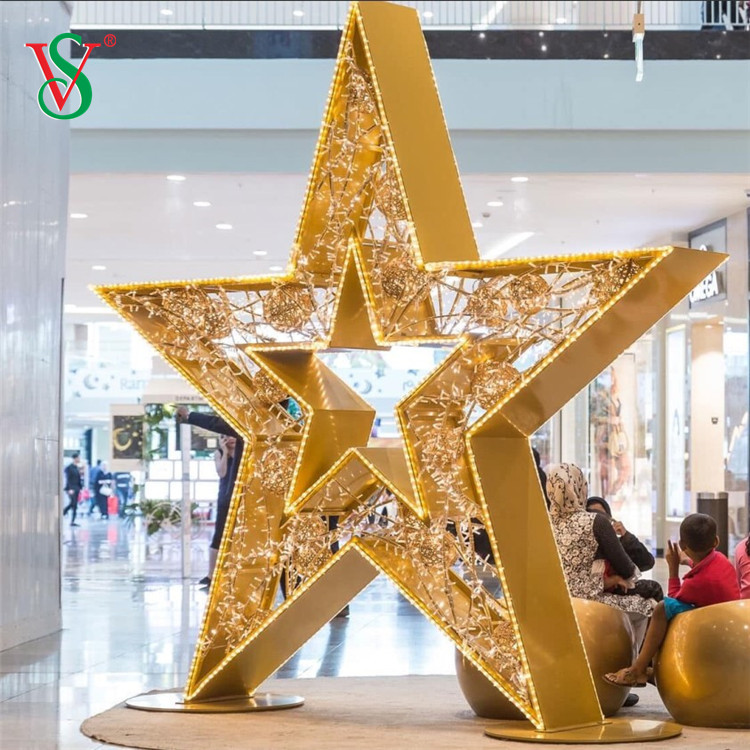
These massive structures serve as walk-through arches or oversized crescents. Sizes typically range from two meters to over ten meters tall. Manufacturers build them using reinforced metal frameworks. They wrap these frames in high-density LED rope lights. They are best suited for mall atriums, public squares, and sprawling hotel lobbies. A towering 3D moon star motif light acts as a primary selfie node. It anchors the entire visual experience.
These flat designs mount directly onto existing municipal light poles. They look spectacular lining hotel driveways or mall parking perimeters. Because they hang above public roadways, they require strict weight evaluations. Engineers must calculate precise wind-resistance thresholds before installation. They provide highly scalable, unified thematic coverage across long distances.
You use these for expansive hotel exteriors or sprawling mall glass facades. Heavy-duty holiday light strings cascade vertically down tall buildings. This application requires incredibly robust rigging points on rooftops. You must also deploy synchronized power supplies to ensure uniform brightness. Facade lighting acts as a beacon, drawing visitors from miles away.
Commercial installations demand rigorous technical scrutiny. Overlooking basic specifications invites catastrophic electrical failures. You must demand precise documentation from your manufacturing partners.
Weatherproofing serves as your first line of defense. You should never accept anything less than an IP65 rating for outdoor installations. Public square deployments face unpredictable weather patterns. Heavy rains and dust storms easily penetrate weak casings. Sealed connections and epoxy-filled LEDs prevent moisture ingress entirely. This guarantees uninterrupted illumination throughout the entire 30-day period.
Structural integrity depends entirely on material selection. You must evaluate the core framing carefully. Aluminum offers a rust-proof, lightweight solution. It is ideal for coastal hotels dealing with corrosive salt spray. Iron frames cost less but require intense baking-varnish treatments. Iron is significantly heavier, making it better suited for indoor mall floor displays. You must match the metal to the local climate conditions.
Electrical safety protects your patrons and your liability. You must outline required certifications clearly in your vendor contracts. Look for CE, RoHS, and UL marks. High-touch public areas demand low-voltage systems. Implementing 24V or 36V transformers eliminates dangerous shock hazards. Never deploy high-voltage direct-plug systems in areas where children might touch the displays.
Luminosity sets the emotional tone. The standard "Warm White" aesthetic typically falls between 2700K and 3000K. This creates the inviting glow associated with Ramadan. You must demand batch-matched LEDs from your supplier. Mismatched batches create patchy, inconsistent lighting. One section might look yellow while another looks stark white. Batch-matching ensures uniform brilliance across massive installations.
| Specification Category | Commercial Grade Standard | Retail Grade (Avoid for B2B) |
|---|---|---|
| Waterproof Rating | IP65 to IP67 (Epoxy sealed) | IP44 (Splash-proof only) |
| Frame Material | Treated Aluminum (Rust-proof) | Untreated wire or cheap steel |
| Operating Voltage | 24V / 36V (Low voltage) | 110V / 220V (High risk outdoors) |
| Wire Gauge | Thick copper (UV resistant rubber) | Thin PVC (Cracks under heat) |
Proper procurement only solves half the puzzle. You must manage complex deployment logistics. Overlooking site-specific risks can delay launches or cause safety breaches. Large outdoor installations present unique physical challenges.
Wind load and weight stress require immediate attention. Massive geometric shapes catch high winds easily. You must secure structural engineering sign-offs for any large motif placed in an open square. Engineers will mandate specific anchoring techniques. They might require concrete ballasts or deep ground stakes. Ignoring wind sheer limits risks catastrophic structural collapse in crowded areas.
Power distribution presents a massive logistical hurdle. You cannot simply plug monumental structures into standard wall outlets. Commercial-grade transformers safely distribute heavy electrical loads. You must plan hidden, weatherproof cabling routes carefully. Exposed cords create severe trip hazards for pedestrians. Work closely with licensed electricians to map power grids before the physical structures arrive.
Storage and breakdown represent significant hidden costs. Commercial buyers must plan for post-season dismantling from day one. You will store these pieces for the remaining 11 months of the year. Modular designs break down into flat panels. This massively reduces warehousing footprint. Rigid, fully welded structures drain budget through excessive storage fees. Prioritize flat-packing capabilities during the procurement phase.
Sourcing commercial lighting requires rigorous vendor vetting. You are seeking a long-term manufacturing partner, not a one-off transaction. A structured evaluation process separates true factories from middlemen.
Assess their prototyping and customization capabilities first. Top-tier vendors easily modify CAD designs. They adjust proportions to match specific architectural dimensions perfectly. They can also seamlessly incorporate corporate or municipal branding into the metalwork. Ask them to provide a customized 3D rendering before you commit to bulk orders.
Demand total supply chain transparency. You need explicit clarity on Minimum Order Quantities (MOQs). Understand their actual monthly production capacity. Discuss shipping terms upfront. Clarify whether they quote FOB (Free On Board) or DDP (Delivered Duty Paid). Knowing exactly who handles customs clearance prevents unexpected delays at the port.
Evaluate their warranty and after-sales support ruthlessly. You must reject suppliers offering less than a comprehensive 1-year warranty on commercial deployments. True manufacturers stand behind their heavy-duty materials. Look for vendors who proactively supply spare LED ropes and backup power supplies in the initial shipment. This proactive support minimizes downtime if minor components fail mid-season.
Successful Ramadan lighting deployments rely on treating the purchase as an infrastructure investment. You should never view commercial decor as a disposable seasonal expense. Heavy-duty materials, precise engineering, and thoughtful aesthetic planning yield returns for years. By prioritizing safety and structural integrity, you create memorable, stress-free cultural celebrations.
Your next steps require immediate action. Audit your physical space now to identify power access and safe rigging points. Initiate supplier RFPs at least three months prior to the start of Ramadan. Do not wait until the last minute. Reach out to verified commercial manufacturers today to request a detailed catalog or technical spec sheet.
A: You should place orders 12–16 weeks prior to the target installation date. This timeline accounts for CAD design approval, manufacturing, sea freight transit, and local customs clearance. Rushing this timeline significantly increases shipping costs and reduces customization options.
A: Yes, provided they feature reinforced aluminum frames and IP65-rated electrical components. You must also ensure they are anchored securely using concrete ballasts or deep ground stakes according to strict structural engineering guidelines.
A: Commercial options use thicker copper wire gauges, rust-proof frames, and modular connectable segments for massive scale. Furthermore, they feature components rated for continuous 30-day operation in extreme weather, whereas retail strings quickly degrade outdoors.


