
- Home
- Products
- About Us
- Custom Services
- Solutions
- Resources
- News
- Contact
Views: 0 Author: Site Editor Publish Time: 2026-07-09 Origin: Site


Large-scale holiday displays drive immense foot traffic, dwell time, and seasonal revenue for retail centers. Vibrant municipalities and commercial venues also rely on these captivating light shows. Beautifully illuminated spaces captivate visitors instantly. They encourage families to linger longer and spend more across your entire property. However, property managers face a unique design challenge every winter season. You must integrate iconic figures like Santa Claus seamlessly. You need to accomplish this without clashing with upscale architectural aesthetics.
Furthermore, professionals cannot rely on fragile, residential-grade materials for public spaces. Weak frames and cheap bulbs fail quickly in harsh winter weather. Cheap decorations look unprofessional and frustrate maintenance teams. We provide a comprehensive technical and aesthetic framework below. You will learn how to select and place commercial-grade equipment properly. We also cover how to evaluate suppliers strictly to protect your investment. Following this guide ensures your seasonal displays remain stunning and highly profitable for many years.
Seamlessly blending character motifs into existing seasonal branding separates amateur displays from professional installations. Visual consistency keeps visitors immersed in the holiday experience. Disjointed decorations confuse the eye and lower the perceived value of your property. We recommend aligning your design choices directly to your architectural environment.
Many heritage downtown districts thrive on traditional holiday aesthetics. Classic retail facades also benefit heavily from vintage styling. You should pair classic red-and-white LED motifs alongside warm-white commercial Christmas display lights. Warm white LEDs typically range between 2700K and 3000K. This specific color temperature mimics the inviting glow of old-fashioned incandescent bulbs. It evokes strong feelings of nostalgia and comfort. Traditional settings welcome these familiar color palettes beautifully.
Contemporary shopping centers and minimalist corporate plazas demand a different approach. A traditional red-heavy motif often clashes harshly against sleek glass and steel structures. Instead, use monochromatic or icy-blue accented designs. Cool white LEDs sitting around 5000K to 6000K create a crisp, elegant visual profile. These cooler tones match modern architectural lines perfectly. They reinforce a sophisticated, premium brand identity.
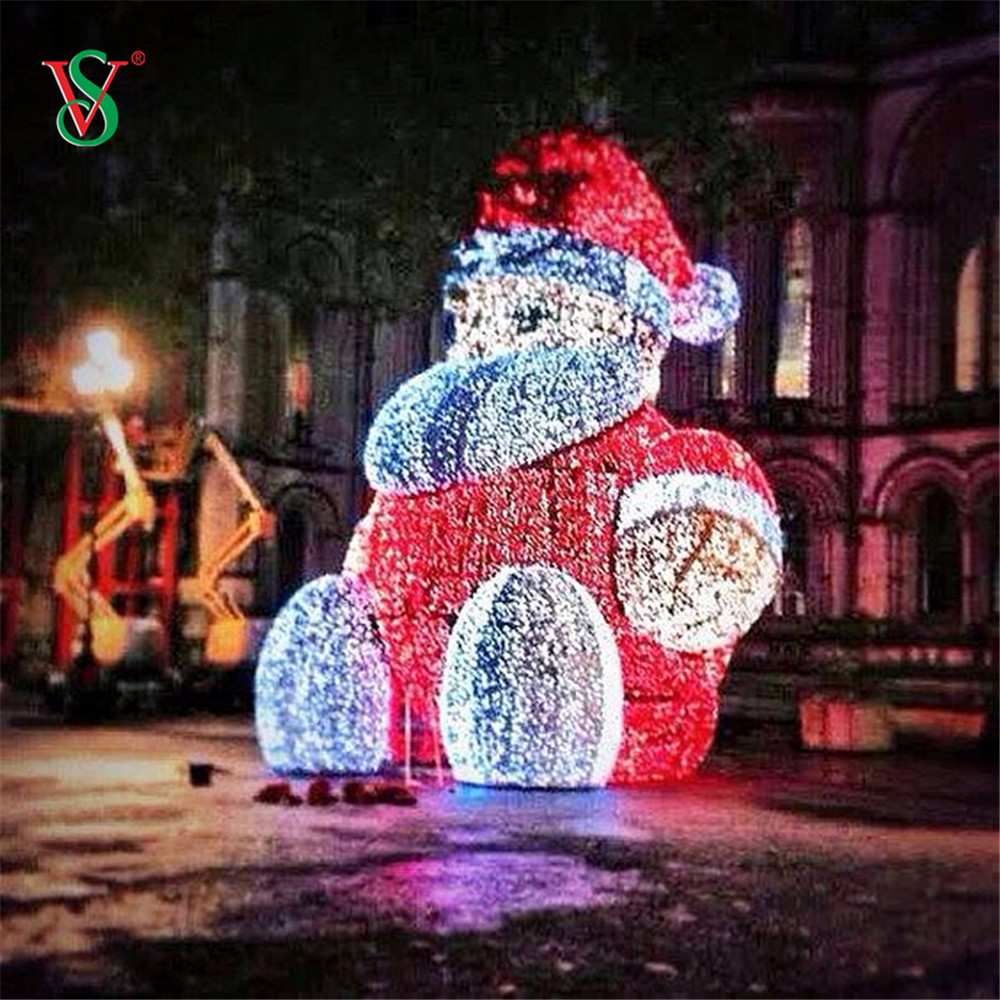
Modern consumers crave interactive, photogenic experiences during the holidays. Walk-through displays and large mall atriums require strong physical anchors. Deploying a 3D Santa decoration light serves this exact purpose. Standalone interactive pieces create natural physical boundaries within wide-open spaces. They guide foot traffic naturally while offering irresistible photo opportunities.
We created the following reference guide to help you match themes effectively.
| Theme Name | Primary Colors | Color Temperature | Ideal Venue Type |
|---|---|---|---|
| Traditional Nostalgia | Red, Gold, Green | 2700K - 3000K (Warm) | Heritage districts, classic retail |
| Winter Wonderland | Ice Blue, Silver, White | 5000K - 6000K (Cool) | Modern architecture, corporate plazas |
| Immersive Anchor | Full RGB / Multicolor | Variable / Dynamic | Mall atriums, interactive parks |
Maximizing visibility requires highly strategic placement planning. You want to generate abundant user-generated content for social media. Simultaneously, you must protect the physical asset from damage. Intelligent placement balances these two competing needs perfectly.
High-elevation placements guarantee excellent highway or main-street visibility. Motorists spot glowing rooftop silhouettes from miles away. 2D designs work best for these elevated applications because they weigh less. However, rooftop implementation requires careful daytime aesthetic planning. You must assess all rigging points carefully. Visible power cables and heavy structural wires look messy during daylight hours. We suggest painting mounting hardware to match the building facade. This simple trick hides rigging effectively during the day.
Ground-level installations drive massive social media sharing. Families love posing next to life-sized glowing figures. Position heavy-duty, freestanding motifs near main venue entrances. This placement strategy captures visitors immediately upon arrival. You must implement strict risk mitigation strategies here. Heavy foot traffic brings accidental damage and vandalism risks. Establish physical boundaries using decorative fencing or planters. You must also use reinforced bases to protect against aggressive crowd pressure.
Drive-through light parks remain incredibly popular. You must sequence your display pieces to tell a compelling visual story. Do not cluster all major pieces at the entrance. Spread them evenly to maintain visitor excitement throughout the entire route. Maintaining appropriate setback distances from vehicle paths remains critical. Cars often slide on icy park roads. Keep delicate installations safely outside the immediate splash and impact zones.
Many buyers accidentally purchase residential-grade equipment for commercial applications. This mistake causes catastrophic mid-season failures. You must evaluate technical criteria strictly to separate professional equipment from consumer goods. Commercial operators demand reliable, rugged construction.
Frame material dictates the structural lifespan of your installation. Residential items often use cheap, thin steel wire. Steel rusts rapidly when exposed to winter moisture. Rust bleeds onto building facades, causing expensive permanent property damage. You must demand powder-coated aluminum frames. Aluminum resists corrosion naturally. The powder-coating process adds a second, highly durable layer of protection against harsh elements.
Water infiltration destroys electronics faster than anything else. You should establish a strict baseline requirement of IP65 or higher for any outdoor Christmas decoration light. IP65 certification guarantees protection against heavy rain and snow jets. You must also inspect the plastic materials used. Demand UV-resistant PVC for all rope lights. Standard plastics turn yellow and crack after prolonged exposure to freezing temperatures and winter sunlight.
Commercial operators cannot afford prolonged downtime. You must evaluate fixed-string designs versus replaceable bulb architectures. Fixed-string designs require replacing the entire unit if a single section fails. We highly recommend modular, replaceable LED components. Standardized components allow your maintenance team to perform quick mid-season repairs. They simply swap out a broken bulb instead of dismantling the entire installation.
Follow these specific steps when evaluating equipment:
Operational bottlenecks routinely disrupt holiday display plans. You must anticipate structural forces, electrical limitations, and storage logistics well in advance. Ignoring these implementation realities leads to budget overruns and safety hazards.
Large illuminated shapes act like massive sails in winter storms. You must calculate wind resistance accurately for all roof-mounted pieces. Coastal and mountainous regions experience especially high wind shear. You must understand guy-wire requirements thoroughly. Heavy-duty concrete ballasts provide excellent stability for ground units. Never rely on simple ground stakes for large commercial pieces. Always consult a structural engineer for installations exceeding twenty feet in height.
Amperage limits dictate exactly how many units you can power safely. High-density LED pieces draw surprisingly significant power at startup. You must calculate the exact amp draw for your entire Santa Claus motif lights setup. Strict commercial breaker requirements usually limit continuous loads to 80% of maximum capacity. Daisy-chaining too many units together melts wires and triggers electrical fires. Always run dedicated, appropriately gauged outdoor extension cords to commercial-grade distribution panels.
Storage logistics often surprise first-time buyers. Massive fiberglass and aluminum structures consume enormous amounts of warehouse space. You must factor warehouse footprint limitations into your initial purchasing decision. We highly recommend highlighting collapsible or multi-piece designs. Modern engineering allows large pieces to break down into flat-pack sections. This smart design choice reduces off-season storage footprint drastically. It also slashes outbound shipping costs significantly.
Always perform these fundamental safety checks before powering on:
Selecting the right manufacturing partner matters just as much as selecting the right product. A rigorous vendor evaluation framework helps you finalize the buying decision safely. You need a partner who supports your installation long after the initial delivery.
Never accept a standard 30-day consumer return policy. You should look for minimum one to two-year commercial warranties. Furthermore, you must verify the domestic availability of replacement LEDs and power supplies. Overseas shipping delays during November and December destroy holiday timelines. Your supplier must stock spare modular components locally. They must guarantee overnight shipping for critical replacement parts during the peak operating season.
Many venues desire unique, branded designs. Custom sizes or localized color variations help your property stand out. However, customization requires careful lead-time balancing. Off-the-shelf items ship within weeks. Custom manufacturing takes several months. If you require custom colors or specific dimensional tweaks, you must place your orders in Q2 or early Q3. Late orders inevitably face severe logistical bottlenecks and expedited shipping fees.
Commercial liability insurance policies feature strict electrical safety clauses. You must ensure all individual components carry the necessary UL or ETL certifications. Uncertified imports pose massive legal and financial risks. If an uncertified unit causes property damage, your insurance provider will deny the claim immediately. Always request digital copies of all safety certifications before signing a purchase order. Attach these documents directly to your internal compliance records.
A successful commercial installation relies equally on aesthetic theme matching and rigorous technical vetting. You cannot focus solely on visual appeal while ignoring structural integrity. Choosing the correct color temperatures ensures your display complements your architecture beautifully. Selecting rugged, IP65-rated aluminum frames guarantees your display survives harsh winter storms. Planning for electrical loads and wind resistance protects your property from dangerous hazards.
You should act early to secure the best equipment and design support. Consult with a commercial lighting specialist today to review your site photos. Discuss your current electrical power availability in detail. Request a full catalog of commercial-grade pieces to begin planning your seasonal layout. Proactive planning guarantees a spectacular, stress-free holiday display this year.
A: 2D motifs feature a flat, single-plane frame. They lack physical depth, making them lightweight and ideal for high-elevation facade or rooftop mounting. 3D motifs utilize a full volumetric structural frame. They possess realistic depth and heavy bases, making them perfect for ground-level, interactive photo displays.
A: Professional equipment usually lasts three to five years under normal operating conditions. You can extend this lifespan significantly by practicing proper off-season storage, replacing burned-out bulbs promptly, and protecting the frames from physical impact during transit.
A: We strongly advise against permanent year-round installation. Continuous exposure to intense summer UV rays degrades PVC wire jackets and fades colored plastics. Dismantling and storing the units indoors maximizes their lifespan and protects your investment.
A: Most large commercial setups utilize standard 120V power for maximum brightness and easier daisy-chaining over long distances. However, 24V low-voltage options exist. You should choose low-voltage models if municipal safety codes require them for ground-level, highly interactive pedestrian zones.


