High-end outdoor wedding designs increasingly rely on integrated structural lighting rather than standard uplighting. Planners now favor immersive environments built directly into event architecture. This evolution turns illumination into a central design feature. However, selecting suitable fixtures requires balancing aesthetic ambition against strict outdoor logistical constraints. Weatherproofing, power distribution, and rigging safety routinely challenge production teams. Achieving harmony between beauty and technical reliability remains critical for outdoor venues. This article provides event designers and couples a reliable technical and visual evaluation framework. You will learn to confidently select and implement commercial-grade lighting structures. We explore hardware specifications, practical design applications, and essential safety deployment strategies. Mastering these elements ensures flawless execution for luxury celebrations.
Key Takeaways
- Compliance First: True outdoor wedding decoration lights require an IP65 waterproof rating and commercial-grade cabling to prevent mid-event failures.
- Structural Integrity: Illuminated arches and suspended LED artificial flowers must account for wind load and rigging limits, not just visual appeal.
- Dynamic Control: Modern RGB butterfly decorations and programmable motifs offer timeline-specific color shifting, maximizing ROI from ceremony to reception.
Defining Commercial-Grade Wedding Motif Lights for Outdoor Use
Many planners mistakenly purchase consumer-grade garden lights for large-scale events. These cheaper fixtures often fail under heavy use. They lack robust weatherproofing. Their light output fluctuates unpredictably. Commercial-grade wedding motif lights offer distinct advantages. They withstand rigorous event schedules flawlessly. You need reliable performance across unpredictable weather conditions. When a cheap fixture fails during the first dance, the entire mood breaks. Photographers lose their meticulously planned background lighting. Videographers capture harsh dark spots instead of a continuous glow. Investing in professional equipment prevents these aesthetic disasters entirely.
Crucial Hardware Specifications
Understanding technical specifications prevents catastrophic mid-event failures. We must evaluate three main hardware categories before finalizing any design proposal. Always demand written specification sheets from suppliers.
- Ingress Protection (IP Rating): Outdoor venues expose equipment to morning dew and unexpected rain. An IP65 rating is absolutely non-negotiable. This certification ensures dust cannot enter the fixture. It guarantees protection against low-pressure water jets from any direction. Some high-end fixtures even offer IP67 ratings for total immersion protection.
- Lumen Output and Dimming: Illumination must remain bright enough for early evening visibility. Yet, you need precise dimming capabilities for late-night ambiance. High-quality fixtures use advanced Pulse Width Modulation (PWM). This technology creates smooth dimming curves. It prevents visible flickering during photography and videography sessions.
- Material Durability: Frames must endure repeated transportation and rough handling. Rust-proof aluminum frames provide lightweight strength. UV-resistant acrylics prevent yellowing over time. Without UV resistance, plastics become brittle and crack. This structural degradation ultimately compromises the waterproof seal.
Specification Comparison Chart | Feature Category | Consumer-Grade Fixtures | Commercial-Grade Fixtures |
| Ingress Protection | IP44 (Splash-proof only) | IP65+ (Fully weatherproof) |
| Frame Material | Plastic or coated steel | Rust-proof aluminum |
| Dimming Technology | Stepped, visible flicker | High-frequency PWM, camera-safe |
| Cable Insulation | Thin PVC, easily damaged | Thick rubber, heavy-duty |
Evaluating Illuminated Arches and Backdrop Installations
Designers are transitioning away from traditional floral arches. Hybrid light-and-flower structures now dominate modern ceremonies. These installations serve dual purposes effectively. They frame the ceremony beautifully during daylight. Then, they transform into striking photo zones after sunset. Guests actively seek out beautiful backgrounds for social media content. A well-designed illuminated arch serves as a primary photo destination. Consequently, the lighting must flatter human skin tones. You need high Color Rendering Index (CRI) LEDs. A CRI above 90 ensures skin looks natural and vibrant.
Selection Criteria for Arch Lighting
Creating safe and stunning arches requires meticulous planning. You must evaluate structural forces alongside visual aesthetics. Overlooking physics can lead to dangerous structural failures.
- Weight vs. Stability: Attaching large fixtures to temporary arches increases wind shear risks. You must calculate the added surface area carefully. Wind acts like a sail against dense installations. Heavy steel base plates are essential. You should also add at least 50 pounds of hidden sandbag ballast per leg. They anchor the structure firmly against sudden gusts. Standard floral foam holds significant water weight. When you combine wet floral foam, heavy blooms, and metal lighting fixtures, total weight increases rapidly.
- Integration with Organics: Live flowers wilt quickly near intense heat sources. You must manage thermal output proactively. Commercial LED fixtures emit very little forward heat. This makes them ideal for mixing into live or dried floral arrangements. Incandescent bulbs pose severe fire risks near dried pampas grass. Roses, orchids, and hydrangeas respond beautifully to integrated lighting.
- Power Routing: Exposed wires ruin an otherwise flawless aesthetic. You must conceal all commercial cabling within structural trussing. Hollow aluminum tubing offers excellent channels for wire management. Zip-tie cables securely along the back edges. This keeps the installation looking clean. Guests will see an entirely wire-free environment.
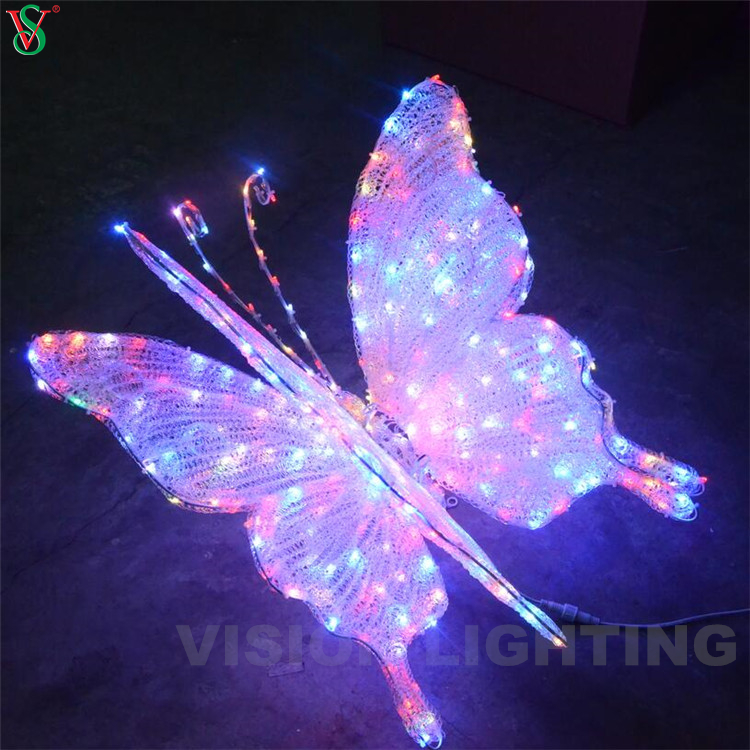
Designing with RGB Butterfly Decoration and LED Artificial Flowers
Immersive designs often incorporate thematic, three-dimensional elements. Planners add these illuminated pieces to garden pathways and overhead canopies. They enhance reception tents effectively. Transitioning from flat lighting to sculptural lighting changes the entire spatial dynamic. Consider a whimsical woodland theme. You can scatter glowing elements across adjacent tree lines. This creates an enchanted forest illusion effortlessly.
Maximizing the Visual Impact
You can elevate venue atmospheres using strategic placement. Thoughtful programming transforms static spaces into dynamic environments. Every fixture should serve a specific design purpose.
- Color Temperature & Programming: An RGB butterfly decoration offers incredible timeline-specific versatility. You can program static warm white light during the formal dinner. Later, you switch to dynamic color-chasing effects for the dance party. This dynamic transition keeps energy high throughout the evening. Modern controllers allow seamless crossfades between these moods. The flexibility of RGB technology means one fixture serves multiple design themes.
- Density and Spacing: Grouping fixtures requires mathematical precision. We use specific spacing formulas to create immersive effects. For a meadow effect, place one LED artificial flower every 12 to 18 inches. For a hanging garden effect, stagger vertical drops between 2 and 4 feet apart. Cluster odd numbers together for organic visual balance. These formulas prevent installations from looking sparse or overly manufactured.
- Mixed Media: Blending artificial fixtures into real foliage requires strategy. We recommend a 60/40 ratio. Use 60 percent real greenery. Use 40 percent illuminated elements. Natural leaves hide plastic stems during daytime hours. At night, the lighting shines brightly through the organic canopy. Real greenery provides volume and texture. The illuminated elements provide focal points and depth. This combination creates a sophisticated, multi-layered visual experience.
Implementation Realities: Deploying Outdoor Wedding Decoration Lights
Even brilliant designs fail if execution falls short. You must address common failure points long before the event begins. Risk mitigation ensures smooth operations. We prioritize safety and infrastructure above all aesthetic choices. Outdoor events require comprehensive action plans for unpredictable variables.
Power and Infrastructure
Adequate power distribution remains a top priority. Overloaded circuits will shut down your entire lighting design instantly. You need resilient electrical systems.
- Load Calculations: You must determine accurate generator requirements early. Add the wattage of every single fixture together. Then, add a 20 percent safety buffer. Running dozens of motifs simultaneously demands robust power drops. Dedicated 20-amp circuits prevent tripping during peak usage times. Always use inverter generators for sensitive LED controllers to ensure clean sine-wave power.
- Cable Management: Guest safety relies on proper pathway trenching. Use yellow or black heavy-duty rubber ramps across all walkways. They prevent tripping hazards effectively. Weather-sealed junction boxes protect electrical connections from ground moisture. Keep all power distribution elevated slightly off damp grass. Securely tape any exposed cords along structural poles using professional gaffer tape.
Rigging and Safety Compliance
Suspend heavy objects overhead carefully. Professional outdoor wedding decoration lights require strict adherence to rigging standards. Gravity and wind are unforgiving variables.
- Overhead Installations: Hanging floral motifs inside clear-top tents demands precision. You must verify weight limits directly from the tent manufacturer. Use rated steel safety cables for tethering. Never rely solely on primary mounting clamps. Secondary tethers prevent catastrophic falls if a clamp fails.
- Permitting: Temporary outdoor lighting structures occasionally require official sign-off. Venue managers or municipal fire marshals may demand structural inspections. Submit detailed rigging plots well in advance. Provide fire-retardant certificates for any nearby fabrics. High winds pose the biggest threat to temporary structures. Establish clear wind-speed thresholds for evacuation. If gusts exceed 25 miles per hour, you may need to lower overhead installations.
Shortlisting Your Vendor and Making the Final Decision
Choosing the right equipment source dictates project success. Event planners must evaluate suppliers carefully. Frequent usage justifies outright inventory additions. Rare, highly customized designs usually favor renting. You need a reliable partnership either way. Building a versatile inventory allows production companies to offer varying packages. You can pitch small cluster accents for intimate weddings or massive overhead canopies for luxury events.
Comparing Options
You must evaluate suppliers beyond their initial price quotes. Long-term reliability matters significantly more. Consider these operational factors.
- Warranty and Replacement: Source vendors offering modular replacements. You want the ability to replace a single damaged LED petal. Replacing an entire fixture wastes money. It also wastes valuable resources. Commercial warranties should cover weather-related degradation specifically.
- Scalability: Your chosen system must expand easily. Proprietary connectors often limit future design combinations. Ensure the vendor uses standard DMX inputs. Check for widely accepted weatherproof connections. This allows you to integrate new pieces seamlessly over time.
- Next Steps: Follow these actionable steps to finalize your decision.
- Map all available venue power points on a site plan.
- Request detailed technical spec sheets from your shortlisted vendors.
- Order a single sample unit for an in-person photography test.
- Test the sample outdoors under actual twilight conditions.
- Confirm the actual dimming curve with your lead photographer.
The testing phase separates average planners from top-tier professionals. Never trust a spec sheet blindly. Set up the sample unit in your warehouse. Spray it down heavily using a garden hose. Leave it running for 12 hours straight. Observe any color shifting or flickering as the unit warms up. This rigorous testing guarantees flawless execution on the wedding day.
Conclusion
Wedding lighting architecture transforms standard outdoor venues into truly immersive experiences. Achieving this effect requires meticulous technical planning alongside reliable hardware. Integrating illuminated motifs effectively bridges the gap between functional visibility and artistic expression. Consider these final action steps for your next event production:
- Audit venue power drops and map your generator requirements immediately.
- Verify all fixture IP ratings and request modular replacement options.
- Conduct an on-site camera test to ensure dimming curves perform flawlessly.
- Consult a rigging professional for any overhead or high-wind installations.
By blending creative ambition with strict logistical safety, you guarantee a visually stunning celebration. Rigorous preparation prevents unexpected outdoor technical failures entirely. Ready to elevate your venue space? Browse commercial outdoor motif product catalogs today. Book a technical consultation to request a custom specification quote for your upcoming installations.
FAQ
Q: Are LED artificial flowers safe to use alongside real floral arrangements?
A: Yes, they are incredibly safe. Commercial LEDs emit minimal forward heat compared to traditional incandescent bulbs. This low thermal output prevents live foliage from wilting. It also eliminates fire risks when mixed into dry arrangements like pampas grass. Always ensure bare wire connections remain fully insulated.
Q: How do RGB butterfly decorations connect to a central controller?
A: Professional fixtures typically use DMX512 protocols. DMX allows you to daisy-chain multiple units back to a central lighting console. This enables precise, timeline-specific programming. Simpler standalone systems use RF remote controls. These remotes manage pre-programmed color chases without requiring an external DMX board.
Q: What happens if it rains heavily on outdoor wedding decoration lights?
A: Fixtures rated IP65 or higher will continue functioning perfectly. This rating ensures internal components remain sealed against low-pressure water jets and heavy downpours. However, water can still enter loose connection points. You must verify all threaded cable joints and junction boxes are tightly secured.
Q: How much power does a standard illuminated wedding arch require?
A: Power consumption varies significantly by design density. A basic illuminated arch usually draws between 150 and 300 watts. High-density designs featuring hundreds of integrated LEDs might pull up to 800 watts. Always calculate exact wattage from vendor spec sheets to size your generators accurately.


